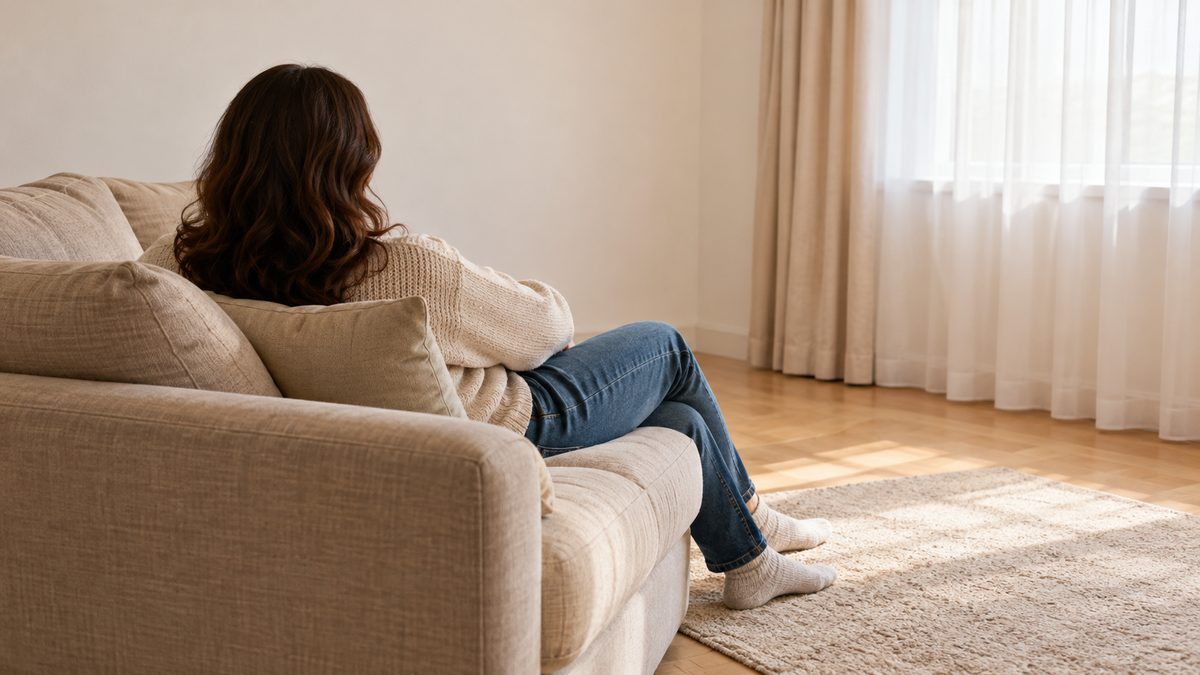
Make sofa evenings more comfortable by supporting your back and feet, facing the screen and getting up between stretches of viewing. A relaxed slouch is not automatically harmful, but staying in a position that aches can make a long evening uncomfortable. You do not need to sit rigidly upright to watch television.
Dark evenings can quietly replace walks, errands and time outdoors with extra sitting. The useful change is to build movement into the evening as well as adjusting the seat. A carefully arranged cushion cannot do the job of getting up occasionally.
Find out why your sofa makes you slide
Deep seats can leave a gap behind your lower back when your feet reach the floor. You may slide forwards, tuck your pelvis under or prop yourself on one elbow. A soft seat can also make rising harder because you have to climb out of the dip.
These positions are not evidence that your spine is being damaged. The issue is whether you can settle comfortably, move freely and stand up without a struggle. Try sitting farther back with support behind you before deciding the sofa itself must be replaced.
If the seat sags noticeably or you cannot rise steadily, use a firmer chair for part of the evening. Avoid balancing on a high stack of loose cushions. A seat that shifts beneath you can create a new problem while trying to solve the first one.
Match the support to what you notice
| What happens during viewing | Adjustment to try | What to check afterwards |
|---|---|---|
| You perch to reach the floor | Use a firm cushion behind your back | Your back reaches support without pushing your knees forwards |
| Your feet hang or reach awkwardly | Try a stable foot support | Your legs rest without pressure behind the knees |
| Your head stays turned | Choose a seat facing the screen | You can look ahead with relaxed shoulders |
| You lean heavily on one arm | Bring support closer and change sides | You can let both shoulders relax |
| You sink too low to get up | Move to a firmer, accessible seat | Your feet can come beneath you for standing |
Test one adjustment while watching a short section, then reassess. Remove support that causes pressure or makes you arch your back. The article on lower back cushions explains why more padding does not always mean more comfort.
Let the screen come into your line of sight
A television high above your seated eye line may encourage a lifted chin. One off to the side can leave your neck turned throughout a film. Changing your seat may be easier than rearranging the whole room, especially in shared accommodation.
Check from your usual relaxed position rather than while perched upright. If you share the sofa, take turns with the seat that faces the screen, or angle a separate chair towards it. Keep a walking route clear when moving furniture.
Using a phone while watching adds another position to consider. Rest your arms comfortably and bring the phone nearer your line of sight instead of holding your head down for the whole programme. See phone use and posture for ways to reduce prolonged neck bending.
Give each viewing session an exit point
Decide on a cue before pressing play: the end of an episode, a natural pause or getting a drink. Stand and walk around when the cue arrives. If you tend to ignore it, keep the remote somewhere that requires standing safely to reach it between programmes.
Use the break for an ordinary task, such as taking a cup to the kitchen or closing curtains. You can also straighten your legs, change your sitting position or gently move your shoulders while seated. Small movements are useful options when a full walk is difficult.
Avoid waiting until you feel locked into the sofa. Our guide to breaks from sitting offers prompts that fit daily routines. There is no single break interval that makes unlimited sitting comfortable for everyone.
Finish the evening somewhere you can sleep comfortably
If you become drowsy, move to bed before you fall asleep with your head hanging sideways. Keep a light on for the route and clear blankets away from your feet before standing. Put both feet on the floor, move towards the seat edge and rise at a pace you can control.
Sleeping on the sofa occasionally is different from choosing it as your regular bed. If stairs, breathlessness or pain make you avoid your usual bed, discuss that reason with a healthcare professional. The guide to sleeping in a recliner or on a couch explores the practical checks.
Recognise pain that should not wait for the credits
General seating advice cannot identify the cause of pain. Get medical advice if symptoms persist, disturb sleep, or occur with fever or unexplained weight loss. Significant pain after a fall also needs assessment.
New bladder or bowel control problems, loss of feeling around the bottom or genitals, or new symptoms affecting both legs need emergency care. Chest pain or severe breathlessness also needs urgent help. Use the back pain warning signs guide to recognise when a seating adjustment is not enough.
Frequently asked questions
Is lying along the sofa better than sitting?
It may feel comfortable if your whole body fits and your head has suitable support. Change position if you have to curl tightly, twist towards the screen or hang your feet over a hard armrest.
Can I sit cross-legged while watching?
Yes, if your hips and knees tolerate it and you can change position easily. Do not force your knees down. Uncross your legs if you feel pain, tingling or pressure, and choose another arrangement if symptoms recur.
Does a warm blanket prevent back pain?
A blanket can make a cool room feel more comfortable, but it does not prevent pain or replace movement. Keep its edges away from your feet when standing and avoid staying still simply to keep it in place.
How can I support a laptop used for streaming?
Put it on a stable surface where you can see it without sustained bending. Keep ventilation openings clear of cushions and bedding. If that setup leaves the screen too low, use another screen or choose a shorter viewing session.