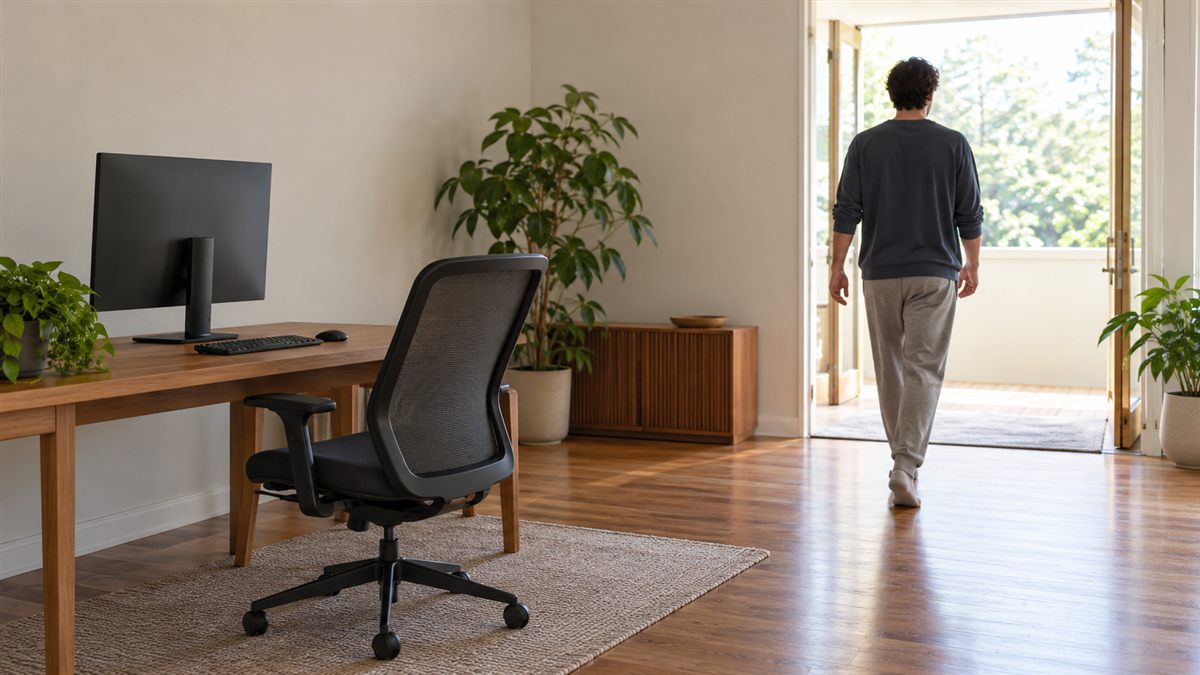
Regular breaks work best when they interrupt long spells of stillness before discomfort becomes your alarm. There is no magic interval that suits every body and every job. Build repeatable opportunities to change position, move your legs and look away from close work.
A break does not need a special routine, exercise clothes or a large room. Standing to fetch a document or walking while a kettle boils can create useful variety. The challenge is usually remembering and making space for movement when work absorbs your attention.
Use the shape of your working day
Look for transitions that already happen. Finishing an email batch, completing a spreadsheet section or ending a call can become a cue to leave the chair. This links the action to something concrete rather than relying on a vague intention to move more.
If your tasks do not have clear endings, try a gentle reminder. Choose a frequency that interrupts prolonged sitting without making the day unworkable. When it appears, use it to check your position and take a brief movement opportunity where possible.
A reminder should prompt a decision rather than become background noise. If you dismiss it repeatedly, change the timing or tie it to a more realistic action. The goal is a routine you can use on ordinary busy days, not an ambitious schedule abandoned by lunch.
Choose movement that matches the moment
Walk a short distance when you can. You might refill water, deliver a question in person or take a loop through your home. Keep routes clear and choose safe opportunities rather than walking while reading a screen or navigating stairs on a call.
When leaving the workstation is difficult, shift your feet, change the backrest position or stand briefly if suitable. These are options, not a complete replacement for moving away later. Our desk sitting guide explains how to keep more than one seated position available.
Gentle movements can fit into a pause, but they should feel comfortable. Avoid forceful stretches, sudden twisting or using a rolling chair for balance. If you already have pain or a condition affecting movement, follow advice tailored to you.
Match the break to the constraint
| Work situation | A practical option |
|---|---|
| A long video meeting | Change position while listening, then walk when the meeting ends. |
| Deep individual work | Use a task milestone or quiet timer to mark a short pause. |
| Frequent phone calls | Stand for selected calls when equipment and balance allow. |
| Limited workspace | Take a short clear route outside the immediate desk area. |
| A shared office | Use existing trips for water, printing or discussion as movement cues. |
Choose one or two options initially. A short list is easier to remember than a complex menu. If the routine fits naturally, expand it later. You can also ask colleagues to leave a small gap between meetings when that is within your team's control.
A standing desk changes position, not the whole day
Standing can provide a useful alternative to sitting, but standing still for hours can also become uncomfortable. Alternate positions and keep opportunities to walk. You do not need a standing desk to leave the chair, and owning one does not remove the need for breaks.
Set both heights properly so the change remains convenient. A screen that becomes too low while standing can replace one awkward position with another. Our standing desk tips cover keyboard height, screen adjustments and safe movement of the desk.
If you prefer to stand for a particular task, keep a chair available. Return to sitting when you need to, without treating the change as a setback. Position variety is easier to maintain when neither option is framed as the only correct one.
Notice barriers beyond forgetfulness
Some jobs measure availability tightly or provide few pauses between calls. If your role makes breaks difficult, discuss possible task rotation, planned gaps or suitable adjustments with a manager. A personal timer cannot solve a workload that leaves no realistic opportunity to respond.
Home workers may face a different problem: breaks turn into more screen use. Scrolling on your phone can keep your head lowered and your attention close. Try a change in distance and environment instead, such as looking outside or walking to another room.
Travel and meetings also change your options. Plan movement around safe stops and available space, with extra consideration for mobility needs. Small, feasible choices are more useful than judging a disrupted day against an ideal routine.
Make returning from a break straightforward too. Leave a brief note about your next step before standing, so the work is easy to resume. This can reduce the feeling that a pause will break your concentration completely. A modest movement habit is easier to protect when you know where to restart rather than holding the entire task in memory.
Review comfort without making promises
After several working days, notice which cues you followed and which you ignored. Keep the useful ones. You might learn that calls are dependable movement prompts while timers interrupt customer work. Adapt the plan to that information rather than repeatedly demanding more willpower.
Breaks are one part of daily activity. For a simple way to add movement outside desk tasks, read walking and back health. Start with a level you can manage and adjust gradually instead of compensating for a sedentary day with an exhausting session.
Movement advice cannot explain persistent pain, dizziness, weakness or numbness. Seek professional guidance if symptoms continue or worsen, and obtain urgent help for concerning changes such as bladder or bowel problems with back pain. Use breaks to support a varied day while taking new symptoms seriously.