For a long family car trip, passengers should sit with their back supported, feet resting comfortably and the seat belt positioned as the vehicle instructions require. Change position within that safe set-up and plan proper stops so you can get out and move.
Back comfort should work alongside crash protection. Avoid reclining far back, putting feet on the dashboard or changing the belt path to make a position feel softer. This is general travel guidance; a recent operation or a condition affecting travel needs individual advice.
Set the passenger seat before filling the car
Sit back against the seat and check whether the cushion supports your thighs without pressing behind your knees. Adjust the backrest to a comfortable, fairly upright position that allows the belt to lie correctly. Consult the vehicle manual for the seat, head restraint and airbag-related positioning.
Check the space when the seat in front is in its travelling position. Rear passengers need room for their legs without having to turn sideways. If the car is too crowded for everyone to sit safely, reduce the luggage or change the travel arrangements rather than squeezing someone into a twisted posture.
Keep soft support small and optional
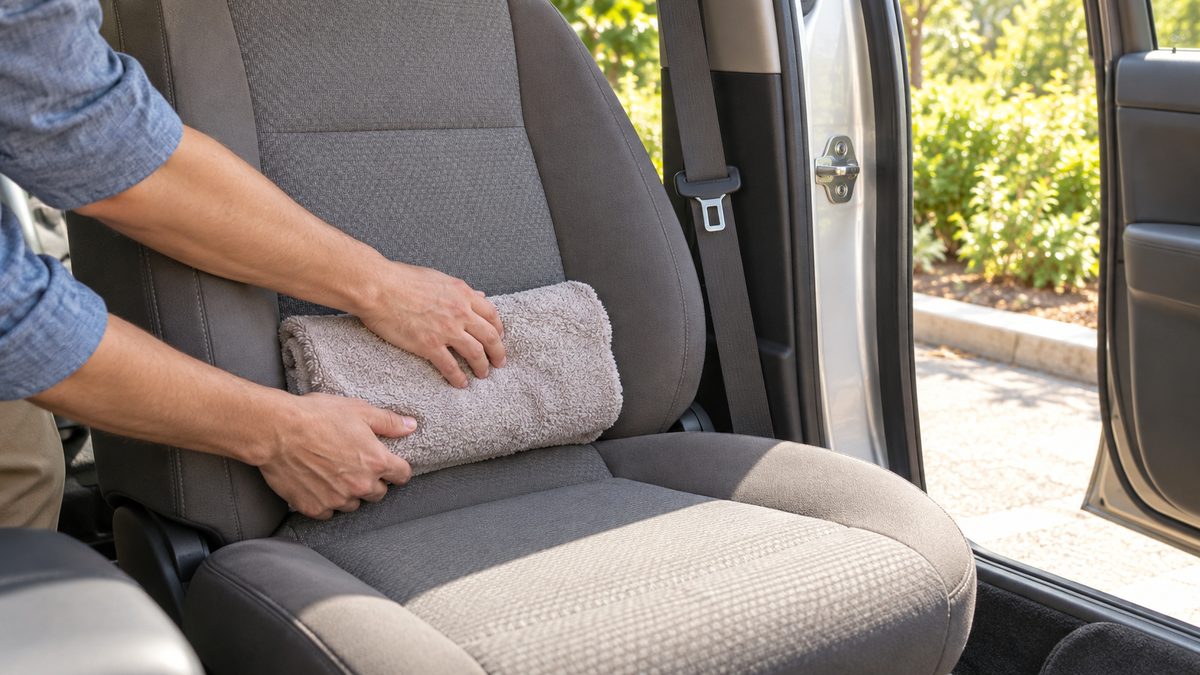
A small folded towel at the lower back may feel comfortable for an adult passenger if it does not interfere with the belt or seat fit. Start with little support and remove it if it increases pressure. A large cushion that pushes you forwards can change both comfort and restraint positioning.
Do not add cushions or padding to a child's restraint unless the restraint instructions permit them. Child seat installation and suitability need their own checks. For adult seating adjustments, the car posture guide covers the broader set-up.
Give feet and everyday items their own space
Clear the footwell before setting off. A bag under one foot can leave your pelvis tilted, while a bottle rolling around may tempt someone to bend down during travel. Secure loose items appropriately and keep anything the driver may need away from the pedals.
Keep a light layer and reading glasses within comfortable reach. Ask for an item to be passed when safe instead of twisting into the boot or reaching behind the seat. Store heavier luggage in the designated luggage space, secured as instructed for the vehicle.
| Passenger problem | Useful adjustment | Keep in mind |
|---|---|---|
| One knee held higher by a bag | Clear the footwell | Secure the bag elsewhere |
| Lower back feels unsupported | Try a small folded towel | Retain correct belt fit |
| Phone held low for a long time | Pause screen use and support forearms | Do not obscure the driver's view |
| Stiffness builds before arrival | Use the next safe stopping place | A seat adjustment cannot replace getting out |
Plan stops around the journey you have
Choose possible stopping places before departure, then remain flexible. Children needing food or a toilet can provide a natural opportunity for adults to move too. Avoid treating a scheduled arrival time as a reason to ignore discomfort, driver tiredness or a passenger feeling unwell.
At a stop, walk somewhere separated from traffic. Gentle movement is enough; you do not need to stretch deeply beside the car. Let the driver rest properly and leave time for everyone to settle safely before leaving. The guide to sitting breaks explains why changing the task matters.
Leave the seat in stages when you arrive
Wait until the car is parked safely before unfastening your belt. Check outside for traffic, kerbs and slippery surfaces. Open the door only as far as the surroundings allow, and move any bag that blocks your feet before trying to stand.
Turn towards the doorway with small movements, bringing your legs round rather than leaving your feet planted while twisting your trunk. Place your feet securely, use a stable part of the vehicle if needed and stand in a way you can control. Avoid pulling on the open door if it may swing.
If the seat is very low or your mobility is limited, allow extra time and ask for suitable assistance. Someone pulling your arms suddenly is not a reliable transfer plan. Discuss repeated difficulties with a physiotherapist or occupational therapist rather than struggling at every stop.
Unpack after you have regained your footing
Walk a little before tackling a deep boot full of luggage. Bring a case towards the edge before lifting it, if you can do so safely, and split loose items into smaller loads. Ask for help with awkward pieces instead of lifting them while half turned towards the house.
Keep the return journey in mind when packing. Items used on the road should be accessible without dismantling the load. Our travel posture advice can help connect the car journey with waiting, carrying and the rest of the day.
Do not dismiss new symptoms as travel stiffness
Seek emergency care for back pain with new difficulty controlling your bladder or bowels, numbness around the genitals or bottom, or new weakness affecting both legs. Severe pain after a collision needs urgent assessment. Stop travel safely if symptoms require immediate help.
Get medical advice for persistent or worsening pain, fever or unexplained weight loss. Read when back pain needs a doctor. A passenger who is too uncomfortable to sit with the restraint correctly positioned needs a different plan, not an unsafe workaround.