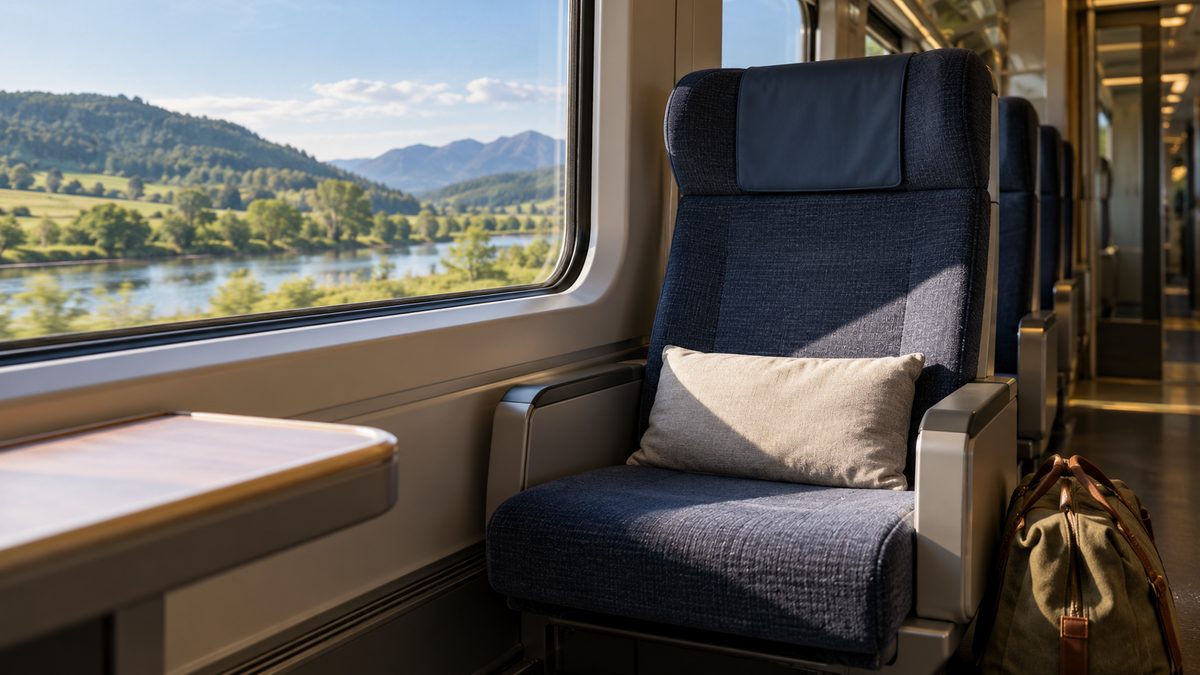
A long journey combines limited space, luggage and unfamiliar seats. Comfort improves when you plan for those constraints before departure. You do not need to maintain a perfect upright position throughout a flight or train ride. A workable seat, manageable bags and opportunities to change position are more useful goals.
Some travellers have health conditions that affect movement or the safety of long journeys. Ask your clinician about individual needs before booking when relevant. These posture suggestions focus on everyday comfort. They do not replace advice about blood clots, recent surgery, pregnancy complications or another medical concern.
Choose access as well as legroom
If you can select a seat, think about getting in and out as well as stretching your legs. An aisle position may make movement easier, while a window position may offer a place to rest. Availability, cost and personal needs will shape the choice. Check accessibility arrangements directly with the travel provider.
Keep important items in a small bag that you can reach without repeatedly twisting beneath the seat. Leave the space your feet need clear where storage rules allow. Do not block an aisle or emergency route. Ask staff where a mobility aid or larger bag should be stored rather than improvising.
Settle into the seat with modest adjustments
Sit back and notice what the seat supports. If there is an uncomfortable lower-back gap, a small folded garment may help, provided it does not compromise the seat belt. Avoid a thick roll that pushes you towards the edge. Put both feet on an available stable surface without taking over another passenger's space.
Use the recline respectfully and according to travel rules. A partly reclined backrest may feel comfortable, but keep the belt positioned as instructed. Bring reading material closer to eye level for short periods instead of bending over your lap throughout the journey. The phone use guide covers ways to reduce that sustained reach.
Change position when it is safe
Use permitted opportunities to stand and walk. On flights, follow the seat belt sign and crew instructions; turbulence is a reason to stay seated. On trains, hold a suitable support when walking if the service is moving. Avoid standing near doors or unstable luggage to perform a stretch.
When seated, gently move the ankles and change how your legs rest within the space available. Avoid forcing a movement or exercising through pain. These small changes can make a confined seat feel less static. They do not guarantee prevention of blood clots or other travel complications.
Pack a journey comfort checklist
- Put medicines and essential documents where you can access them easily.
- Keep the bag you carry light enough to handle without a rushed lift.
- Wear comfortable clothing and footwear that does not create pressure.
- Plan safe chances to stand, with alternatives if movement is restricted.
- Keep water accessible and follow any individual fluid advice.
- Carry only the pillow or support you can position comfortably in the available seat.
- Arrange assistance early if stairs, transfers or luggage handling are difficult.
For a sleeper train, check how you will reach the berth and where you can safely place belongings. Request an accessible option where available rather than assuming you can manage a high berth while tired. Keep the route to the aisle clear. A familiar small pillow may be practical, but avoid carrying more than you can manage.
Lift luggage without rushing the transfer
Overhead racks and baggage carousels invite awkward lifts because space is limited and other people are waiting. Get close to the bag, check its weight and decide where it is going before lifting. Use two hands when practical. Turn with your feet rather than holding a heavy bag while twisting sharply.
Ask for help when the load or reach is beyond what you can comfortably manage. Do not stand on a seat or lift while the vehicle jolts. Review lifting heavy objects before packing. The heavy bag article helps reduce the load itself rather than relying only on technique.
Rest without fighting the seat
A travel pillow should make resting easier, not push your head forwards or hold it in an uncomfortable turn. Try the fit before the trip. Some people prefer a small support to the side; others sleep better without one. Keep your airway clear and follow any advice for breathing conditions.
Change position after waking rather than immediately stretching hard in a cramped seat. If you are using a sleeper berth, get down slowly and use the provided supports. For the first night after arrival, the pillow and sleeping posture guide can help with an unfamiliar bed.
At connections, resist making up lost time by sprinting with an awkward load. Use a trolley where available and leave enough transfer time when booking. If delays change what you can manage, ask staff about assistance. The plan can adapt to the journey rather than depending on you handling every stage without a pause.
Allow a gentle arrival
Leave a little time between arrival and the next demanding task when possible. Walk comfortably, eat and rest before tackling heavy unpacking. If a journey includes another long drive, plan a break between stages. Tiredness can make luggage handling and driving less safe even when your back feels fine.
Seek urgent medical help for sudden breathlessness, chest pain, or a newly swollen painful leg. New bladder or bowel changes, saddle numbness or leg weakness also require emergency assessment. For persistent travel-related discomfort, speak with a clinician and describe the journey, seat and activities that seemed to aggravate it.