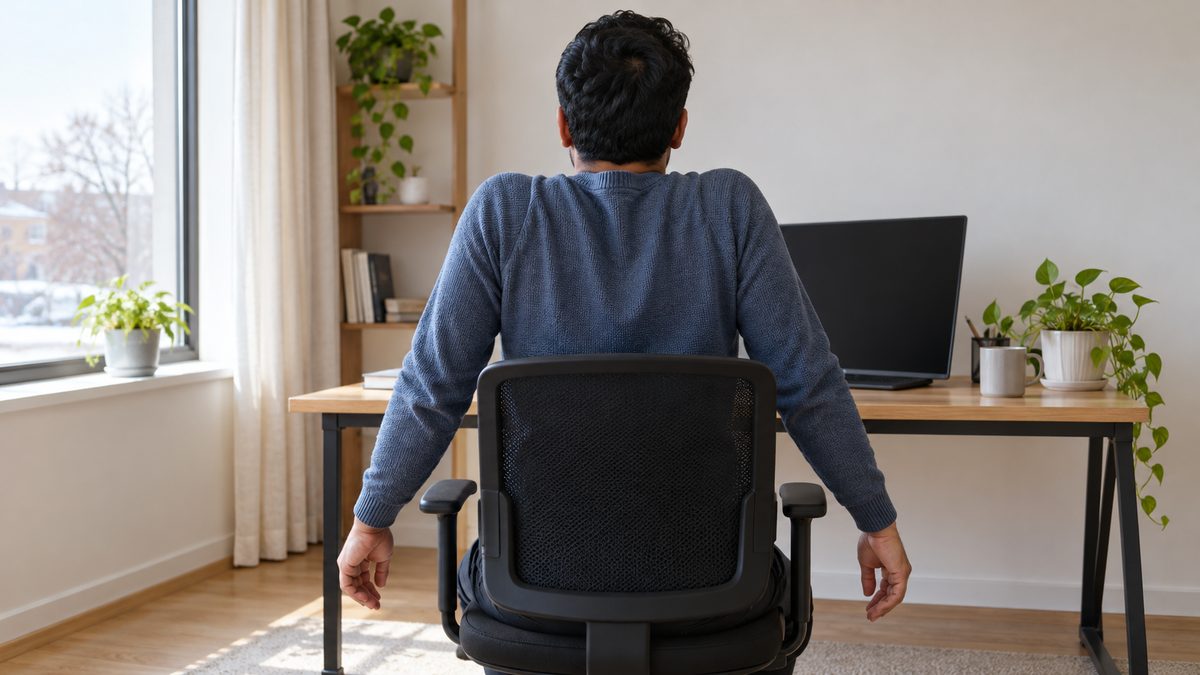
On a cold, stiff office day, try small shoulder movements, comfortable ankle movements and a short walk rather than forcing a deep stretch at your desk. Keep every movement easy, breathe normally and stop if it hurts or brings on tingling, dizziness or weakness.
Desk movements are general options for changing a static working position. They are not a treatment plan and do not need to produce a strong stretching sensation. Warm clothing, a workable desk layout and opportunities to move may be more useful than adding more exercises.
Prepare the chair and floor before moving
Push loose cables and bags out of the way. Check that the chair is stable and that your feet can rest securely. A rolling chair is not a reliable support for standing stretches, and a wheeled desk may move when you lean on it.
If you feel unwell, very cold or dizzy, address that first. Do not start a standing movement just because a reminder appeared. Follow individual instructions after surgery or injury, and ask your clinician which movements suit a diagnosed condition.
Release the shoulders without pulling the neck
Sit comfortably and let your arms rest by your sides or on the desk. Raise your shoulders gently, then let them settle. Follow with small, relaxed shoulder circles if comfortable. Keep the movement modest and avoid trying to squeeze your shoulder blades together as hard as possible.
Turn your head a little to look towards one side, return to the middle and try the other side only within an easy range. Keep your chin level enough to feel relaxed. Do not pull your head with a hand or make large neck circles to chase a click.
If you notice that the same shoulder tightens every time you return to work, check the mouse reach and screen position. Our monitor positioning guide helps connect the movement break with the task causing the long reach.
Move the ankles while the upper body rests
With your feet in a comfortable position, gently lift and lower your heels, then your toes, as far as feels easy. Keep enough contact with the floor to stay steady. Avoid pressing hard into the desk or holding your breath.
If space allows, straighten one knee a little and return the foot to the floor without locking the joint or leaning backwards. Skip the movement if it pulls painfully behind the leg or causes spreading symptoms. A short walk may suit you better than a seated leg movement.
Use standing as a change of task
Stand from a stable chair when you have a clear route and feel steady. Pause, then take a comfortable walk to collect water or speak to a colleague. You do not need to keep working through the break or balance beside the desk while reading a message.
For a gentle chest-opening movement, stand comfortably and let your arms hang while your shoulders settle. Avoid pushing your lower back into a deep arch. If you want more movement, an easy walk is a reasonable choice without adding a complex stretch sequence.
Choose a movement according to the problem
| What you notice | Movement to consider | Desk change to check |
|---|---|---|
| Shoulders held high | Gentle shoulder lift and release | Forearm support and keyboard height |
| Head held turned | Easy return towards the middle | Screen directly in front |
| Legs feel still | Comfortable ankle movements or walking | Foot space beneath the desk |
| Whole body feels fixed | Leave the workstation briefly | Task changes during the day |
Try a movement slowly and decide whether it feels comfortable before repeating it. There is no required repetition count for this break. A smaller range is a valid choice, and skipping one option does not mean the break has failed.
Make the office warmer without restricting movement
Use adjustable clothing layers where workplace rules allow. Keep your hands free enough to type without lifting your shoulders. A thick coat can change how you fit the chair, so check the backrest and armrests after adding a layer.
Keep any blanket away from chair wheels and the walking route. Follow workplace instructions for heating equipment and report an uncomfortable working environment through the appropriate route. Do not use vigorous stretches to compensate for a workspace that remains too cold for comfortable work.
The desk ergonomics checklist can help you review the set-up as a whole. If the laptop is low, a short stretch break will not remove the need to look down again afterwards.
Attach movement to work you already finish
Use the end of a call, a completed document or a trip for water as a cue. Pick the movement that fits the space rather than attempting every option each time. The sitting breaks guide offers ways to make these changes part of an ordinary working day.
Notice how you feel when you return to the task. If stretching leaves you more sore, reduce the range or choose walking instead. Repeated discomfort despite sensible adjustments is a reason to seek individual advice, not to stretch more forcefully.
Stop for symptoms that need assessment
Seek medical advice for persistent or worsening pain, pain with fever, or unexplained weight loss. New arm or leg weakness also needs assessment. Read when a back problem needs a doctor before treating spreading symptoms as ordinary office stiffness.
Back pain with new bladder or bowel control changes, numbness around the genitals or bottom, or new weakness or numbness in both legs requires emergency care. Severe symptoms after a serious injury need urgent help. Do not repeat a stretch to test these warning signs.