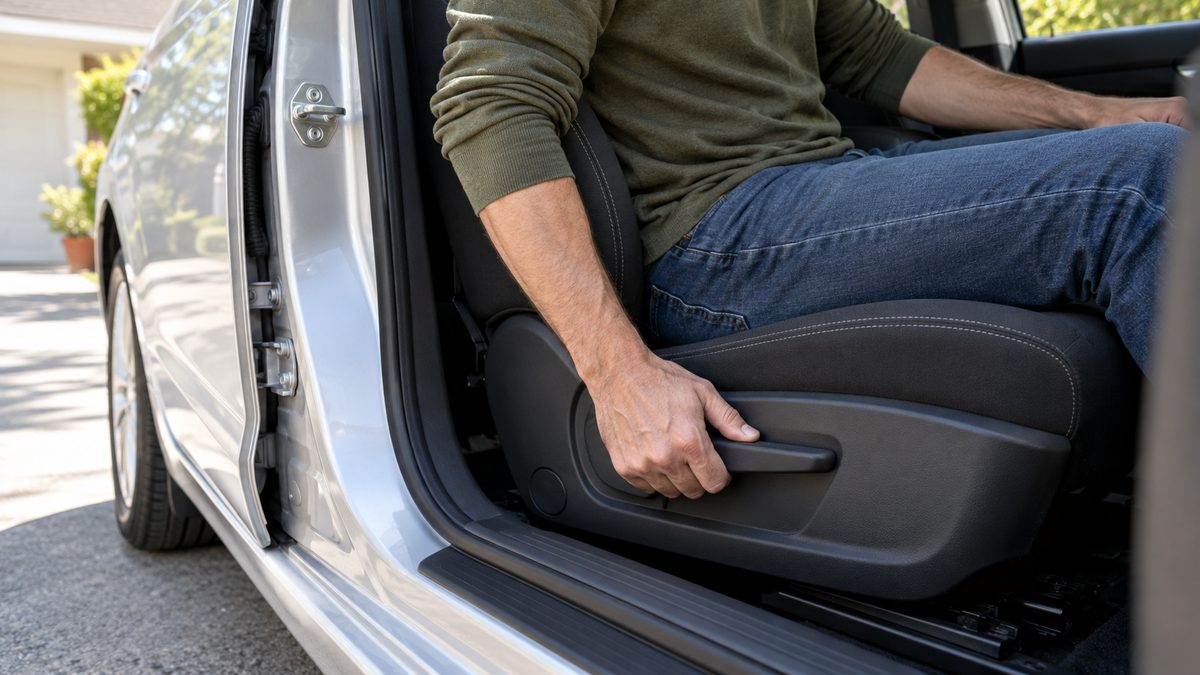
For a more comfortable commute, adjust your seat before setting off so your back is supported and you can reach the wheel and pedals without stretching. Take movement breaks only when safely parked, and turn towards the door before standing out of the car. Never trade control or visibility for a posture that looks better.
Slow traffic can turn a familiar journey into a long period of sitting and concentration. You cannot remove every delay, but you can reduce unnecessary reaching and plan what happens before and after the drive. This is general comfort guidance, not a way to treat back pain.
Set the pedals first, then work upwards
Park securely and follow the vehicle handbook when adjusting the seat. Wear the shoes and outer layers you intend to drive in. Empty a bulky wallet or phone from a back pocket if it leaves you sitting unevenly.
- Move the seat so you can press the pedals through their required travel without sliding your hips forwards or locking your knee straight.
- Adjust the seat height to see the road and instruments clearly, leaving suitable head clearance. Do not raise yourself with loose household cushions.
- Set the backrest so your back rests against it while your arms reach the wheel comfortably. Avoid a position that makes you pull your shoulders away from the seat.
- Adjust the steering wheel, if possible, within the handbook guidance. Your arms should have room to move and your legs should not be crowded.
- Position the head restraint according to the handbook, then set mirrors from this driving position. Check the seat belt lies as intended across your body.
Repeat the checks after someone else uses the car. A seat memory setting is useful only if it still suits your clothing, footwear and current needs. Our car posture guide for longer drives adds detail on finding a workable driving position.
Keep support small enough to preserve control
If the seat has adjustable lower back support, start with a modest setting. Increase it only if it feels comfortable without pushing you forwards. You do not need a strong arch or a hard object pressing into the small of your back.
Check the handbook before adding accessories. Nothing should interfere with seat belts, airbags, seat sensors or the secure position of the seat. An attachment that feels comfortable while parked may still be unsuitable for driving.
Avoid wedging a cushion behind your head or sitting on a loose pad to gain height. If you cannot reach the controls and see properly with the available adjustments, seek advice from a qualified driving or vehicle adaptation professional. Do not try to compensate by stretching throughout the journey.
Leave the traffic queue for driving
A queue is not a safe place for stretches, seat changes or reaching into the back. Even when stationary, traffic may move unexpectedly. Keep your attention on the road and follow local driving rules.
Notice unnecessary tension without taking your hands or attention away from driving. If you are gripping harder than needed, ease your grip while maintaining control. Keep the cabin at a comfortable temperature so you are not hunching against cold air or becoming drowsy in excessive heat.
Set navigation and arrange essentials before leaving. A bag placed behind the passenger seat can tempt you into a long twist; leave it alone until parked. Stow loose items securely rather than keeping a heavy bag on your lap.
Make the stop useful when a safe place is available
For a journey that regularly runs long, identify somewhere lawful and safe to stop before you travel. Do not stop on a motorway shoulder or another hazardous place for a posture break. If no safe stop is available, continue to a suitable location.
Once parked securely, get out if it is safe and walk on a suitable surface. Easy movement is enough; roadside stretching beside moving traffic is not necessary. Avoid bending straight into the boot for a heavy bag as your first action after sitting.
The travel posture article covers movement around journeys. Before a predictable commute, allow time for a short walk rather than moving directly from bed to car, then car to desk. At arrival, walk before beginning another long seated task.
Turn out of the seat before lifting your bags
Check the ground, kerb, cyclists and passing vehicles before opening the door. Remove the seat belt and bring your legs towards the doorway while turning your body with them, using stable support if needed. Place your feet securely before rising.
Do not pull on an open door as if it were a fixed rail. If the space is narrow, take extra time rather than forcing a twist around the steering wheel. Park where you have room to exit when you can choose.
Collect bags as a separate task after standing steadily. Bring a load close, face the direction you will move and avoid lifting while half seated. See lifting and carrying advice for handling a heavy work bag or shopping.
Decide when symptoms make driving unsafe
Do not drive if pain prevents effective steering, pedal use or observation. New weakness, reduced sensation, dizziness or medication that causes drowsiness may also make driving unsafe. Ask a clinician about symptoms or medicines that affect your ability to drive.
Seek urgent medical assessment for worsening weakness, fever with back pain or pain following a collision. New loss of bladder or bowel control, numbness around the genitals or bottom, or symptoms in both legs can require emergency care. Arrange help rather than driving yourself. Read when back pain needs a doctor for further warning signs.
Frequently asked questions
What can I adjust as a passenger?
Use the available seat adjustments while parked and keep the seat belt correctly positioned. Keep feet off the dashboard and avoid reclining into a position that compromises restraint use. Ask for a safe stop if discomfort is building.
Should I remove a thick coat before driving?
Consider doing so before setting off if it limits arm movement or prevents the seat belt fitting properly. Follow vehicle guidance on belt fit, secure the coat away from the controls and adjust the cabin temperature for comfort.
Are seated neck stretches suitable at red lights?
Keep attention on driving at junctions and traffic signals. Save deliberate exercises for when you are safely parked. A traffic light can change while your head is turned, and a stretch should never compromise observation.
Does this advice apply to bus and train commutes?
Supported sitting, manageable bags and movement at safe opportunities still matter. You may not control the seat, so choose available support and avoid standing or stretching while a vehicle moves if you cannot balance securely.