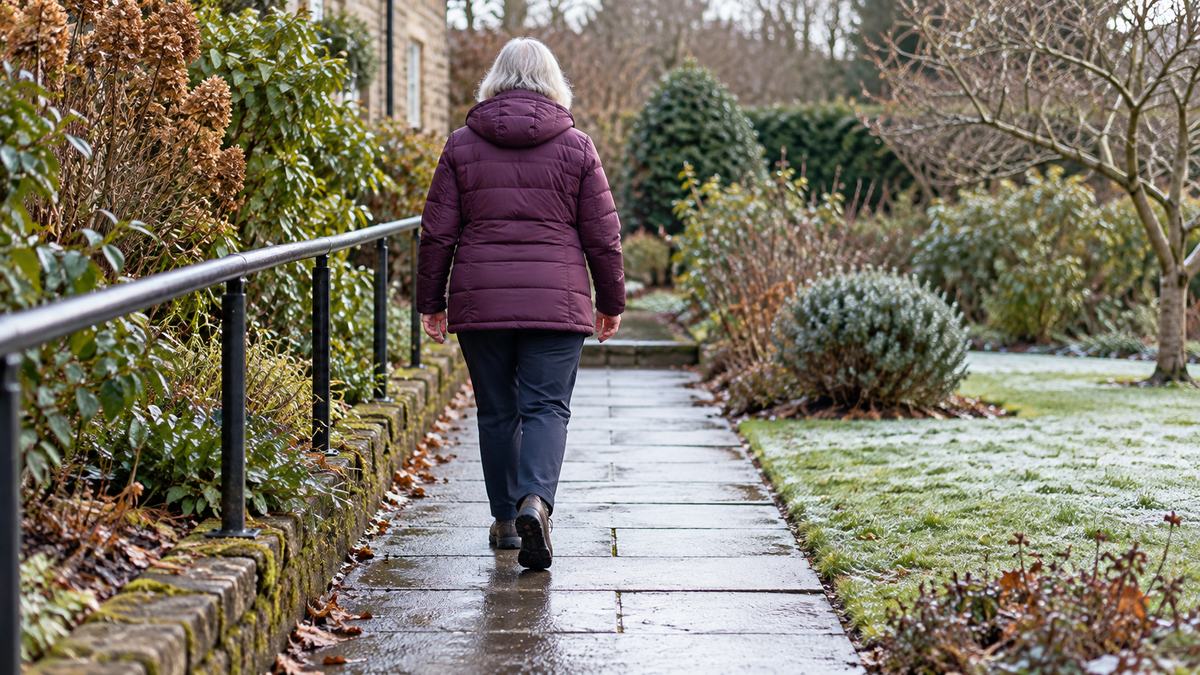
On wet or icy paths, choose a clear route, wear secure footwear with suitable grip and take shorter, unhurried steps. Keep your hands available and carry less. If you cannot find a reliably safe way through, postpone the walk or use another route.
No shoe or walking technique can make every slippery surface safe. This advice is about reducing avoidable difficulties, not guaranteeing that you will not fall. Your balance, visibility, the slope and the return journey all affect the decision.
Look at the whole route before stepping out
Check the doorstep and the path beyond it, including shaded areas and any slope towards the road. Wet leaves, smooth paving, mud and standing water may create difficulties even without ice. Do not assume a surface is secure because another person crossed it quickly.
Choose a route with better visibility, available handrails and fewer awkward crossings. A longer clear route may be preferable to a short slippery cut-through. Think about the conditions when you return, especially if light or temperature may change.
If you need to travel, consider asking for help or using an alternative that avoids the hazardous section. Staying active does not require walking on an unsafe path. The indoor movement options can provide a different plan for the day.
Check footwear for fit as well as the sole
Choose footwear that stays securely on your feet, allows comfortable steps and has a sole suited to the conditions. Inspect worn areas and remove mud lodged in the tread before leaving. A deep-looking pattern is not a promise of grip on ice.
Fasten footwear while seated if that feels steadier. Avoid loose slippers or a shoe that slips at the heel. If you use a traction accessory, follow its instructions and check suitability when moving indoors, driving or stepping onto a different surface.
Our footwear and posture advice discusses comfort and fit in daily use. Choose according to the task and conditions rather than a claim that one shoe can correct your posture.
Slow the steps and leave room to react
Take short steps at a comfortable pace, without reaching far ahead with each foot. Keep your attention on the surface and give other people space. Avoid sudden turns or hurried changes of direction to catch a bus or move around someone.
Use a secure handrail where available and approach steps carefully. Do not take your hands out of your pockets at the last moment while already losing balance. Wear gloves if needed so keeping your hands available remains comfortable.
Put your phone away before crossing a slippery section. If you need directions, stop in a safe place to check them. A conversation can continue once the ground is easier; it does not need to compete with watching your footing.
Carry less so your arms remain useful
Split shopping, arrange delivery or ask someone to help with a bulky load. A bag that swings or hides your view of the ground makes the walk harder to control. Keep any necessary load manageable and avoid carrying hot drinks through an uncertain section.
A well-fitted light bag may leave your hands available, but it still adds a load. Do not fill it beyond what you can carry comfortably because it has two straps. The heavy bag guide offers ways to reduce the items you need to move.
A doorstep decision checklist
- Can I see the ground clearly enough for the whole route?
- Is there an alternative to the steep or slippery part?
- Are my shoes secure, with soles in usable condition?
- Can I reduce the load and keep a hand available for a rail?
- Do I feel steady today, without dizziness or unusual weakness?
- Can I turn back without becoming stranded or pressured to continue?
If several answers are uncertain, change the plan before you leave. Do not use the trip as a balance test. Someone with repeated falls, reduced sensation in the feet or difficulty judging surfaces should ask a clinician for individual advice and appropriate mobility support.
Know how you will respond if the path changes
Stop where you are secure if you encounter an unexpected slippery stretch. Look for a clear alternative rather than stepping onto grass or the road without checking. Ask for help if needed, but avoid grabbing another person in a way that could pull both of you over.
If you already use a walking aid, follow the advice given for that aid and check its condition. Do not improvise with an umbrella as weight-bearing support. For broader activity planning, see walking and back comfort.
After a slip, assess before trying to continue
After a fall, take time to assess pain and your ability to move. Seek urgent help for severe pain, a possible head or neck injury, or inability to bear weight. Do not allow someone to pull you upright forcefully when an injury is possible.
Back pain with new loss of bladder or bowel control, numbness around the genitals or bottom, or new weakness or numbness in both legs needs emergency assessment. Worsening pain, fever or unexplained weight loss also needs medical advice. Read back pain warning signs and assessment.