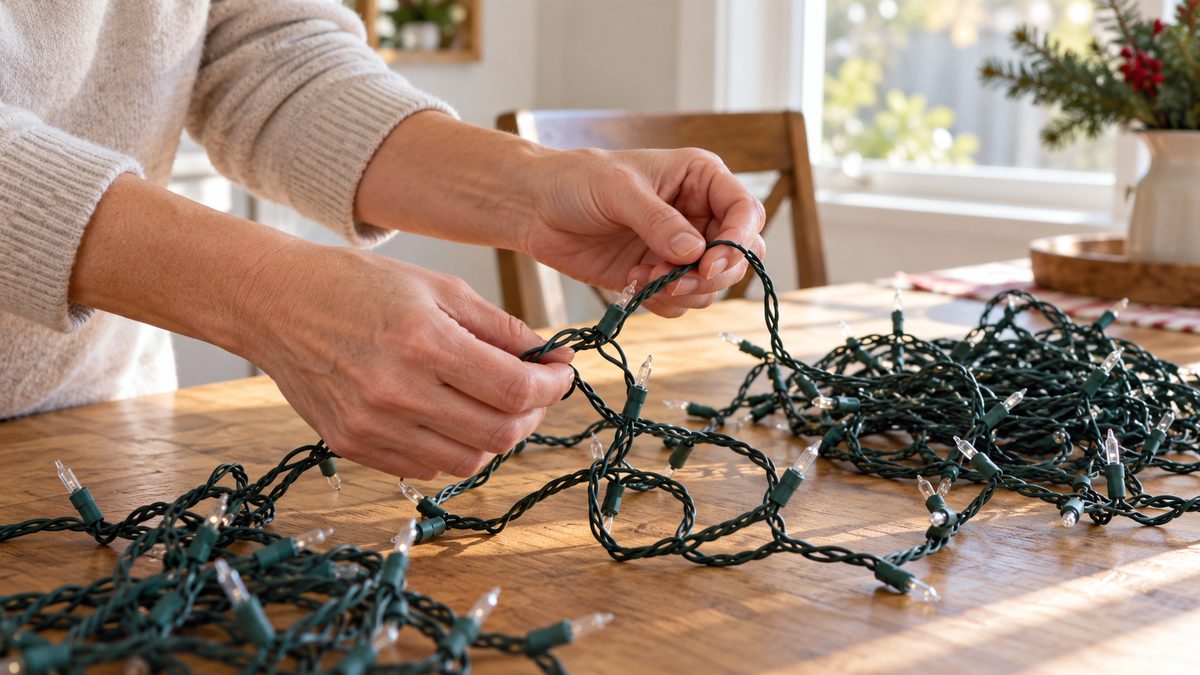
Reduce strain when putting up outdoor Christmas lights by untangling them at a table and choosing fixing points you can reach safely. Avoid leaning sideways from a ladder; a lower display or trained help is a better choice when the height or ground makes access uncertain.
Putting lights up early gives you time to plan, but it does not make damp paving, poor light or an awkward reach safer. Divide preparation from installation so you are not solving knots and electrical problems while standing above the ground.
Choose the display from the ground first
Look at the route in daylight. Decide where the lights will start, where the cable will run and how you will remove them later. A low fence or reachable porch detail may give the effect you want without roofline work.
Check for overhead electrical lines and other hazards. Do not use a ladder or carry long equipment near power lines. If access involves a roof, uncertain electrical clearance or a position you cannot assess safely, leave the work to an appropriately trained professional.
Keep doorways, paths and escape routes clear. Plan cables so people will not step over them or catch them when carrying shopping. Do not run a lead across a walking route and assume everyone will remember it is there.
Untangle and inspect at a comfortable table
Bring the lights to a stable table rather than bending over a box on the floor. Spread out one section at a time, keeping the remaining length supported so it does not drag the coil off the edge.
Work close enough that your elbows can stay near your body. Turn the coil or move around the table instead of holding a long reach. Alternate sitting and standing if either position becomes tiring. The guide to wrapping at different heights uses the same principle of bringing the task within reach.
With the lights disconnected, look for damaged insulation, exposed wire, broken fittings and loose connections. Do not use damaged lights or make improvised repairs. Follow the supplied instructions for checking and testing; disconnect the supply again before fitting or adjusting them.
Use lights and electrical connections intended for the outdoor conditions involved. Check the instructions for weather protection and the required electrical protection. Ask a qualified electrician if you are unsure about the supply or connections.
Use a ground-level checklist before any ladder work
- Weather: postpone the job if wind, rain, ice or poor visibility makes footing or handling uncertain.
- Surface: check for firm, level ground free of wet leaves and clutter. Never level a ladder with loose bricks or boxes.
- Equipment: inspect the ladder and follow its instructions for setup, locking parts, load and standing positions.
- Reach: choose a position that keeps the task close. If the ladder cannot be placed safely, change the display.
- People: keep children and pets away from the work area and have another adult available to help from the ground.
- Footwear: wear secure shoes with grip, and check that soles and rungs are clean.
A chair, garden table or stacked container is not a substitute for suitable access equipment. Read decorating safely with a ladder before deciding whether ladder work is appropriate for you.
Move the ladder instead of chasing the next fixing
Climb facing the ladder, maintaining secure contact as its instructions require. Do not climb while carrying a tangled bundle that blocks your view or occupies your hands. Prepare small sections below and arrange safe handling before starting.
Keep your body centred between the side rails. Stop before the next fixing makes you lean out or stretch overhead. Climb down, reposition the ladder on a suitable surface and check it again. Never shuffle or move a ladder while someone is on it.
Do not assume that a helper holding the base makes an unsuitable setup safe. If fitting the lights needs both hands and you cannot maintain secure contact, choose a safer method or get trained help. A helper should not stand underneath you or catch falling tools.
Avoid pulling a snagged cable from height. Come down and find the snag with the supply disconnected. Pulling harder can suddenly change your balance when the cable releases.
Keep boxes close and share the carrying
Bring only what you need outside. Separate a large storage box into smaller loads, leaving enough view of the ground. Place materials where they will not create another obstacle beside the ladder.
When lifting a box, move close, use a comfortable bend through hips and knees and rise without a sudden twist. Turn by stepping round. The everyday lifting advice explains how to assess an awkward load before picking it up.
Pause between sections to lower your arms, walk a little and check how you feel. Finish at a sensible stopping point while there is still daylight. A half-finished display can wait; fatigue and fading light are reasons to stop.
Stop for symptoms that affect balance or control
Do not start ladder work if you feel dizzy, unsteady or unusually weak. Follow medical advice after surgery or if you have a condition affecting balance, and check medication warnings. Ask for help with the installation rather than testing your limits above ground.
If back discomfort begins, stop the task and return to ground level safely. Avoid forcing a stretch while on a ladder. Persistent, worsening or recurring pain deserves assessment, particularly if it changes how you walk or lift.
After a fall, seek urgent help for severe pain or a possible head, neck or back injury. New bladder or bowel changes, numbness around the genitals or bottom, or marked new leg weakness needs emergency care. Read when back pain needs medical attention for further general guidance.
Planning questions for an early outdoor light display
Can I leave the lights in place until the festive season?
Only if their instructions allow the intended outdoor exposure and installation. Check them again before use, particularly after bad weather. Keep power disconnected when inspecting or adjusting the display.
Is a long pole a safer way to hang lights?
It may avoid climbing for some tasks, but a long reach can still be difficult to control. Keep well away from overhead electrical lines. Use equipment intended for the task and abandon it if you cannot handle it comfortably.
What should I do with spare cable?
Arrange it according to the electrical instructions, away from feet, doors and moving equipment. Do not leave a loose loop hanging where someone could catch it, or trap a lead in a closing window.
Can I work alone if I stay on the ground?
Ground-level preparation is often easier to manage alone, but avoid awkward loads and electrical tasks beyond your knowledge. Let someone know if you are working outside, and ask for help before a task becomes difficult.