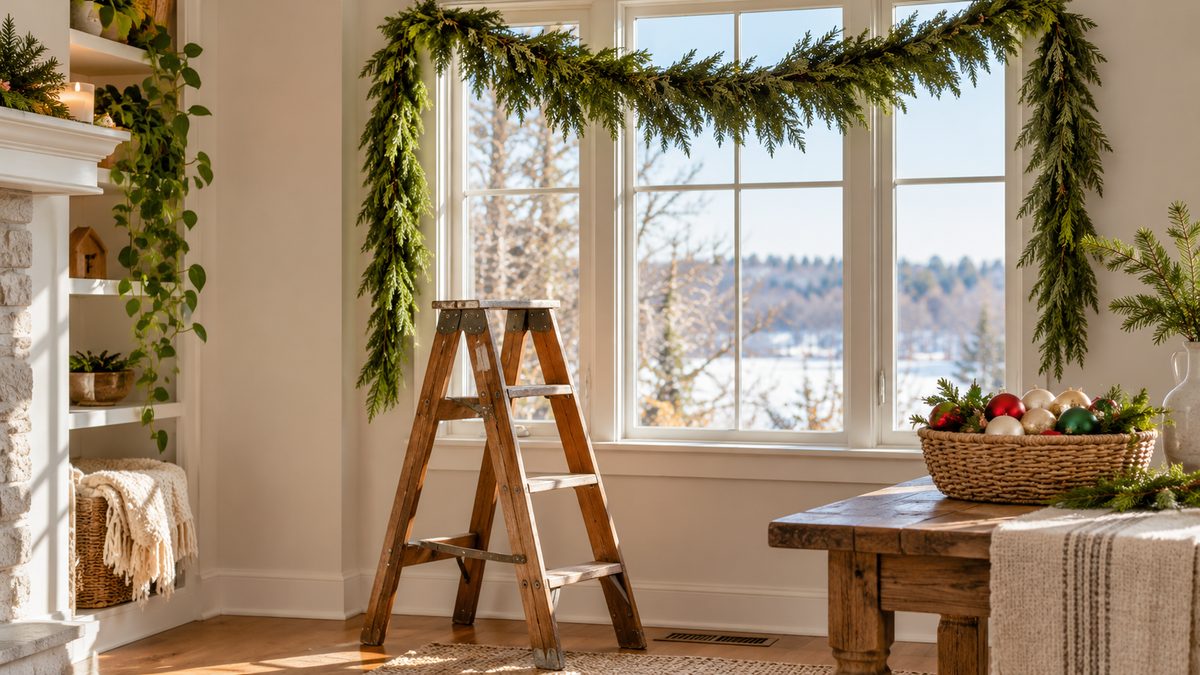
Put up decorations with less back strain by preparing small loads, arranging suitable access and moving the ladder instead of stretching from it. If a task needs an awkward lift from a loft or leaves you unable to keep secure contact while climbing, change the plan or get help.
Decorating combines several demands: carrying boxes, looking upwards, reaching and working in a crowded room. The useful question is not how straight you can keep your back. It is how to bring the work within comfortable reach while keeping your footing secure.
Plan the display while both feet are on the floor
Decide where each item will go before taking out the ladder. Check the fixing method, the route to the display and whether you can reach it with the equipment available. Decorations near electrical fittings require particular care. Follow the decoration instructions and keep fixings away from wiring.
Clear wrapping, loose cables and furniture from the working area. Keep children and pets away while equipment is in use. A person helping should know the next step, including where boxes will be put down. Rushed instructions while someone is already holding a load make a simple task more difficult.
Prepare hooks, ties and light decorations on a table. Untangle strings before climbing. Doing the fiddly work at waist level reduces the time spent looking upwards and avoids discovering a knot when your hands are needed for balance.
Bring loft decorations down as a separate job
Check the access ladder, lighting and storage area first. Never step onto unsupported loft surfaces or use a hatch edge as a lifting platform. If access is cramped, poorly lit or unfamiliar, arrange help from someone competent rather than testing it while carrying a box.
Opening a box and separating its contents may be easier than moving the whole container. A light but bulky box can still block your view or pull you off balance. Avoid dragging something towards an open hatch where it could slide or fall onto the person below.
Do not carry a box up or down a ladder when it prevents secure climbing. Plan a suitable way to transfer items with help; if that cannot be done safely, leave them stored. Our advice on planning manageable lifts also applies to containers that have been untouched for months.
Use the ladder as its instructions describe
Inspect the ladder before use and choose one suitable for the task. Set it on a firm, level surface, fully open and secure a stepladder as instructed, and check the equipment limits. Do not increase its height by standing it on furniture or packing material.
- Position the equipment close enough that the work stays in front of you.
- Wear secure footwear and keep rungs, steps and soles free of slippery material.
- Climb facing the ladder, maintaining secure points of contact as directed by its instructions.
- Keep your body within the side rails and avoid leaning sideways for a distant hook.
- Descend before repositioning the ladder, even if the next fixing looks close.
- Stop if the task needs force, prolonged overhead work or both hands without adequate support.
A helper cannot make damaged or unsuitable equipment safe. If the ladder shifts, your back hurts or you feel dizzy, come down carefully and reassess. Lower decorations, table displays or professional help may be a better choice than continuing overhead.
Sort boxes before carrying them across the house
Test the weight before committing to a lift. Clear the route and choose a destination that does not require twisting behind furniture. Keep a manageable load close, bend through the hips and knees as comfortable, and turn by stepping towards the destination.
If an item needs two people, agree on the route and the signal for putting it down. Carrying together is unsuitable if the route is too narrow or one person cannot maintain a secure grip. Divide contents into smaller containers when possible.
Place the next batch on a table rather than repeatedly collecting it from the floor. A temporary sorting surface can remove many unnecessary bends. See posture during household chores for similar changes to the way work is arranged.
When packing away, label containers by room and separate dense items from bulky, light ones. Store the decorations you use first where they can be retrieved without moving everything else. A clearer storage plan reduces the awkward handling you would otherwise repeat when the next celebration comes round.
Break up looking upwards and reaching
Alternate overhead tasks with sorting at table height or walking to collect light items. Bring your arms down before your shoulders become tired. If you start leaning back to see a fitting, change your position or the display location instead of holding that posture longer.
Spread a large decorating job across separate sessions. Leave enough time to clear away equipment without rushing at the end. If cold storage spaces leave you feeling stiff, use the gradual warm-up ideas in cold-weather back comfort before starting the lifting stage.
After a fall, stop treating it as routine soreness
Seek prompt medical help for pain after a fall or injury, numbness, weakness, fever, loss of bladder or bowel control, or pain that keeps getting worse. A fall from access equipment warrants particular caution; do not keep decorating to see if the pain settles.
Bladder or bowel changes, numbness around the bottom or genitals, or marked or worsening leg weakness require emergency assessment. Read when back pain needs medical attention. This article offers general task guidance and cannot assess an injury or replace advice from your own clinician.