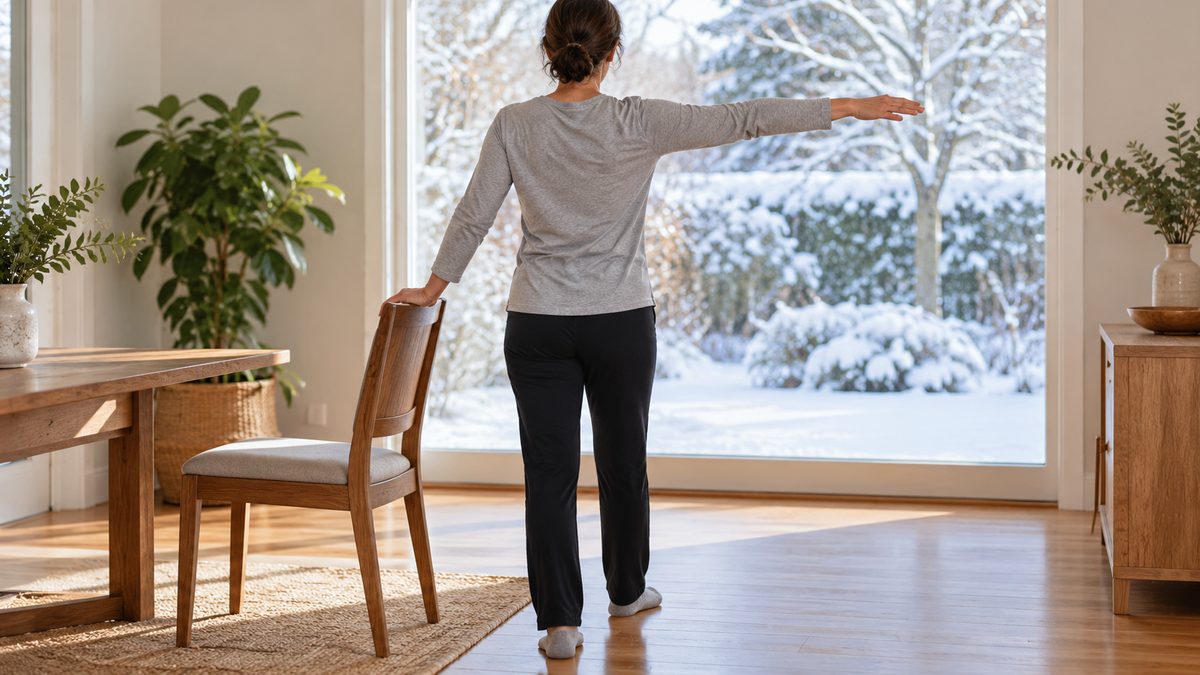
When it is too cold or unsafe to walk outside, try easy indoor walking, gentle weight shifts and small, comfortable movements through your usual range. These equipment-free options help you stay active; they are general guidance rather than a treatment routine for a particular back condition.
You do not need to reach the floor, hold a difficult balance or finish a set number of repetitions. Choose movements you can control and assess how you feel during the session and afterwards. A short comfortable start gives you more useful information than an ambitious first workout.
Prepare a room where you can move without surprises
Clear loose rugs, charging cables and toys from your path. Check that the floor is dry and that your clothing will not catch under your feet. Use secure footwear or another safe option suited to the surface; socks alone can slide on smooth floors.
Make the room comfortably warm without exercising against a heater. Keep a telephone accessible if you are alone. If your balance is uncertain, stay near a solid worktop rather than relying on the back of a movable chair.
Recent surgery, an injury, unexplained pain or medical restrictions may change what is suitable. Follow any plan provided by your clinician. If normal walking is already difficult because of pain or weakness, get advice before building a new routine.
Begin with walking that fits the available space
Walk slowly along a clear corridor or around a room, turning with several small steps. Keep your gaze comfortably ahead and allow your arms to move. Do not rush repeated tight turns if they make you dizzy or unsteady.
If there is little space, try slow stepping on the spot while holding a stable surface lightly for balance. Lift your feet only as far as feels easy. Marching high is unnecessary, and holding your breath makes it harder to judge whether the effort is comfortable.
Pause when you need to and compare how your back feels with the start. The walking and back health article can help you think about building a habit without making every walk a fitness test.
Add a small movement menu rather than a full workout
- Weight shifts: stand with feet comfortably apart near support. Transfer a little weight from one foot to the other without leaning far or lifting the foot.
- Shoulder movement: sitting or standing, let your shoulders rise gently and settle again. Keep the movement easy and avoid forcing your neck backwards.
- Seated trunk turns: sit on a stable seat with feet supported. Turn a small distance to look to one side, return to centre and try the other side without pulling with your hands.
- Comfortable sit-to-stands: if you have a suitable stable chair, move towards the front, place your feet securely and stand slowly. Use the armrests if needed and sit back down with control.
- Easy side steps: where space and balance allow, step sideways and bring the other foot towards it without crossing your legs. Keep support within reach.
No item is compulsory. You can stay with walking and weight shifts if those are the most comfortable choices. A chair used as a seat is ordinary household furniture, not exercise equipment you need to buy.
Avoid bouncing, forcing end positions or trying to produce a crack in your back. More movement is not automatically more useful. Our upper back and neck movement guide provides related ideas, but choose selectively rather than combining every routine.
Use your response to decide what happens next
Movements should feel manageable and leave you able to breathe normally. If a particular direction causes a sharp pain, spreading symptoms, tingling or increasing discomfort, stop that movement. Do not repeat it to see whether it will eventually release something.
After the session, return to light daily activity and check how you feel later. If symptoms remain worse, shorten or simplify the next attempt and seek advice if the pattern continues. Symptoms that are new, severe or concerning need assessment rather than exercise experiments.
When an easy session remains comfortable, add a little more walking or another brief movement opportunity during the day. Change one thing at a time so you can notice your response. There is no need to increase speed, range and duration together.
Attach movement to the indoor day
Choose an existing cue: getting up after breakfast, finishing a telephone call or waiting for a room to air. Make the movement easy to start by leaving the path clear. This is more practical than planning a long session that never fits around family or work.
If most of your winter day is spent at a desk, use regular breaks from sitting alongside any exercise. A brief routine does not require you to stay in one position for the rest of the day.
On days when you are unwell or unusually tired, adjust your plans. Rest when needed, resume gradually and ask for advice if ordinary activity has become much harder. The aim is a sustainable amount of movement, not completing a checklist regardless of symptoms.
Recognise when exercise should wait for medical advice
Seek prompt medical help for numbness, weakness, fever, pain after a fall or injury, and pain that keeps getting worse. New loss of bladder or bowel control, numbness around the genitals or bottom, or severe new weakness in the legs requires emergency assessment.
Stop and use the guide to medical help for back pain when warning signs appear. Chest pain, faintness or unusual breathlessness during activity is also a reason to stop and obtain appropriate urgent help.
Frequently asked questions
Do I need to get sweaty for indoor movement to count?
No. Gentle activity is a useful starting point when your aim is to move more comfortably through the day. Your suitable activity level depends on your health and fitness; do not use sweating as a measure of back benefit.
Can I do these movements before breakfast?
Choose a time when you feel steady and alert. If you get light-headed on rising, sit first and allow yourself time. Follow any individual advice related to meals, medicines or health conditions.
What if I only have room beside my desk?
Clear enough space to stand, shift weight and take a few controlled steps. Avoid turning exercise into balancing around cables or furniture. Walking to another clear room may be a better option than forcing a sequence into a cramped corner.
Should I copy an exercise video at its full speed?
You can pause, slow down or omit movements. A video cannot assess your symptoms or balance. If a routine includes painful bending, rapid transitions or unsupported balance work, choose a simpler option or seek tailored instruction.