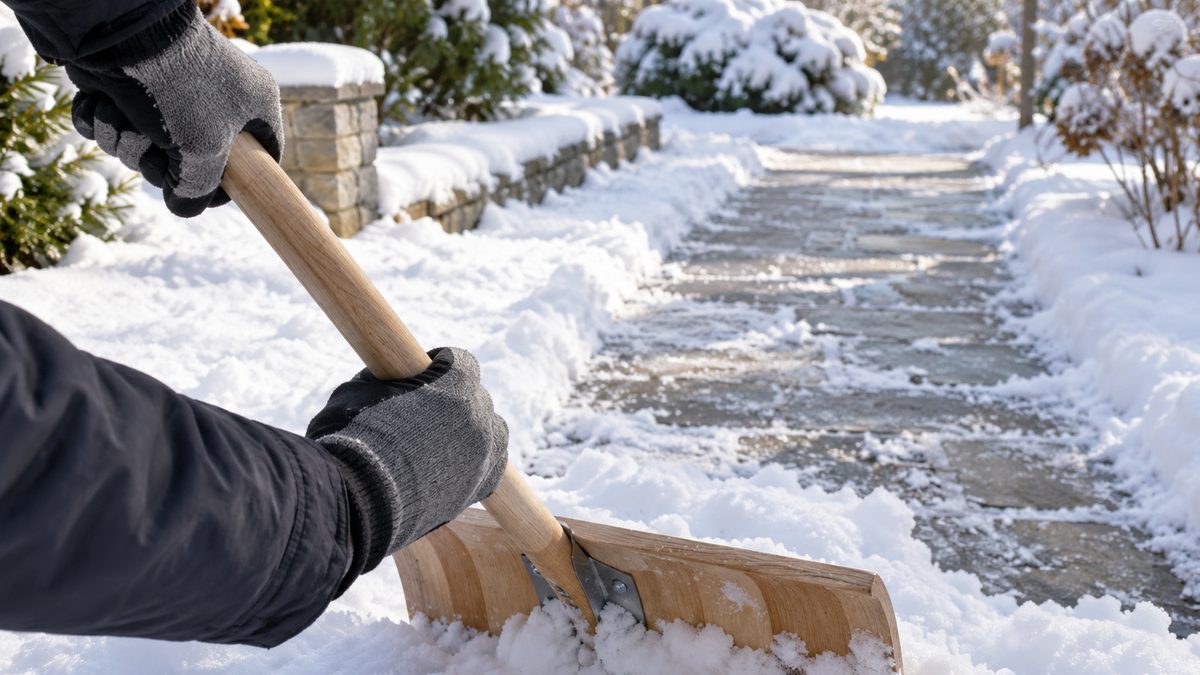
A fresh snowfall looks light, but a shovelful of wet snow can weigh far more than you expect, and clearing a drive means lifting it again and again in the cold. Most back strain from shovelling comes from three habits: lifting with a rounded back, throwing snow over the shoulder with a twist, and trying to clear everything in one long session. Each one is easy to change.
Before you start
- Warm up for five minutes. Walk around, march on the spot and circle your shoulders and hips. Cold muscles are less ready for heavy work.
- Dress in layers and wear shoes with grip. Slipping while carrying a load is a common way to hurt your back.
- Pick the right shovel. A lighter shovel and a smaller blade keep each load manageable.
- Plan where the snow will go. Pushing it a short distance to the side beats carrying it.
Nine tips that protect your back
- Push instead of lifting. Use the shovel like a plough and walk the snow to the edge.
- Keep loads small. Half a blade of heavy snow is plenty. More trips with less weight is easier on your back.
- Bend at the hips and knees. Squat towards the snow rather than folding forward from the waist, as you would when lifting anything heavy.
- Keep the shovel close. Holding the load near your body puts less strain on your lower back than holding it at arm's length.
- Turn with your feet. Point your toes where you want the snow to go and step round, instead of twisting at the waist.
- Never throw over your shoulder. Walk the snow to where you want it and tip it out.
- Swap hands. Alternate which hand is lower on the shaft so one side does not do all the work.
- Take breaks. Stop every 10 to 15 minutes, stand up straight, walk around and drink some water.
- Clear little and often. Several short sessions during a snowfall are easier than one long session on deep, packed snow.
Light snow versus heavy snow
| Snow type | What it is like | Best approach |
|---|---|---|
| Fresh, powdery | Light and easy to move | Wide pusher blade, push to the side |
| Wet, heavy | Dense and much heavier per load | Small blade, small loads, more breaks |
| Packed or icy | Hard, slippery and tiring | Break it up first; use grit or salt; consider help |
Know your limits
Shovelling heavy snow is hard physical work. If you have a heart condition, high blood pressure, a recent operation or an existing back problem, or you do not usually exercise, talk to your doctor before taking it on, and ask a neighbour or family member to help. Stop at once and get medical help if you feel chest pain, tightness, unusual breathlessness or dizziness.
After shovelling
Change into dry clothes and keep moving gently rather than sinking straight into a sofa. A few easy stretches, such as those in our gentle lower back movements, can help a stiff back loosen up. If you are sore the next day, light walking usually helps more than complete rest. Our guide to walking and back health explains why.
For general advice on back pain, the NHS back pain page is a good starting point. Read when to see a doctor for back pain for the warning signs that need prompt attention.
Snow shovelling in short
Push rather than lift, keep loads small, bend your knees, keep the shovel close and turn with your feet. Warm up first, take breaks, and clear snow little and often. If heavy shovelling is risky for your health, ask for help.