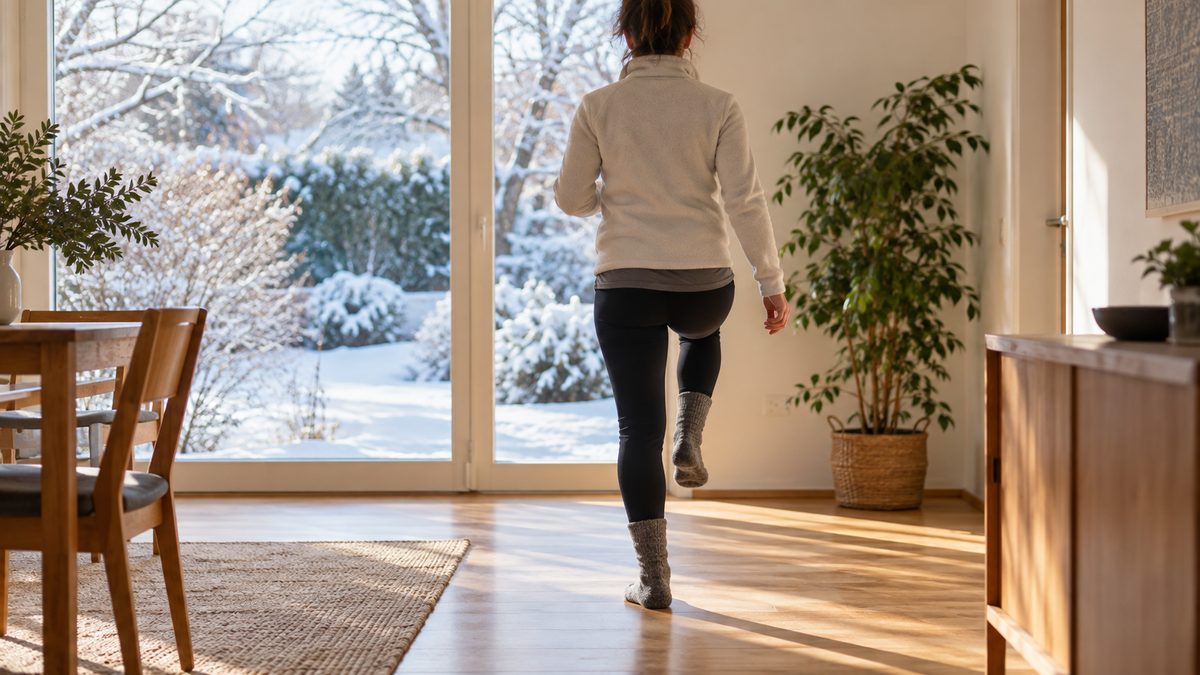
Stay active in cold weather by starting gently, wearing layers you can adjust and choosing a surface where you feel steady. If your back is sore, make the activity easier and shorter rather than forcing your usual pace or stretching through pain.
A cold morning does not mean you must abandon movement. It does mean checking the conditions and how you feel before committing to a long route. These suggestions are general guidance for everyday activity, not a programme for treating a back condition.
Decide what sort of day your back can manage
Start with ordinary movement indoors. Walk between rooms, put on your shoes while seated if needed and notice whether you can move comfortably. Mild stiffness that settles as you move is different from pain that grows, spreads or makes you unsteady. Do not use a warm-up to push past those changes.
Consider the whole outing. A short walk followed by a long wait at a bus stop may involve more cold and stillness than expected. Choose a route with a straightforward return and somewhere sheltered to pause. Our cold-weather back stiffness advice explains ways to adjust everyday routines.
Let the first movements be the easiest ones
Begin with comfortable walking or marching beside a stable surface. Add relaxed shoulder movements and small bends at the hips and knees if these feel easy. Keep breathing normally. The aim is to move into the activity gradually, not to reach a particular stretch or make your back click.
Outdoors, start slower than the pace you intend to maintain. Give yourself permission to keep that slower pace throughout. Avoid beginning with a steep hill, a sprint to catch someone or a heavy bag. If a movement causes sharp pain, stop that movement and reassess instead of repeating it harder.
Use clothes that let you move and adjust
Choose several manageable layers rather than one bulky garment that restricts your shoulders. Check that you can bend your knees, move your arms and see your feet. Keep your hands warm enough to use a rail securely. Wet clothing can become uncomfortable, so have a dry layer available after the outing.
Loosen or remove a layer when you become too warm, somewhere you can stop safely. Carry spare clothing in a light bag that leaves your hands available. Avoid tying several heavy items around your waist if they make your stride awkward. Warmth supports comfort; it is not evidence that an injury has healed.
Match the session to the conditions
| What you find | Practical choice | Reason to change plans |
|---|---|---|
| Dry, level path | Easy walking close to home | Pain builds or you start limping |
| Wet leaves or slippery paving | Use a clearer route with secure footing | You cannot avoid the slippery section |
| Ice or poor visibility | Choose indoor movement | The return journey could become unsafe |
| Feeling tired before starting | Reduce the task and stay near support | You feel dizzy, ill or unusually weak |
A forecast is only part of the decision. Check the surface outside your door and the light available for the return. Advice on wet and icy paths can help you plan, but staying indoors is reasonable when the route is unsafe.
Build an indoor option that is ready to use
Clear a route between rooms, move loose rugs and choose footwear that grips your floor. Walk during a household break or alternate standing tasks with seated ones. A clear, modest plan is easier to use than an ambitious exercise routine that requires rearranging the whole room.
If you normally exercise outdoors, replace the movement with something familiar rather than trying a demanding new routine because the weather changed. Use the indoor winter movement guide for ideas you can adapt. Leave enough space around furniture, pets and children before beginning.
Afterwards, notice how you feel during normal tasks as well as immediately after moving. If your back becomes more painful later, make the next session easier. Keep a simple note of the activity and your response, without treating every passing sensation as damage.
Make the return home part of the session
Keep the final part of the route easy enough that you can arrive without rushing. Once inside, take off wet footwear somewhere you can sit securely and clear it from the doorway. Have a drink if you need one and change damp layers before settling into a longer seated task.
If you are walking with someone, agree at the start that either person can shorten the outing. Company can make a walk more enjoyable, but it should not make you feel obliged to keep up. Choose a meeting point close to home instead of committing to a distant destination.
Know when exercise needs to wait
Seek emergency assessment for back pain with new loss of bladder or bowel control, numbness around the genitals or bottom, or new weakness or numbness in both legs. Severe pain after a serious fall also needs urgent help. Do not try to walk off these symptoms.
Arrange medical advice for worsening pain, fever, unexplained weight loss or pain that keeps interrupting sleep. Read when to see a doctor for back pain before choosing an exercise progression. If you have restrictions after surgery or a diagnosed condition, follow your clinician's advice.