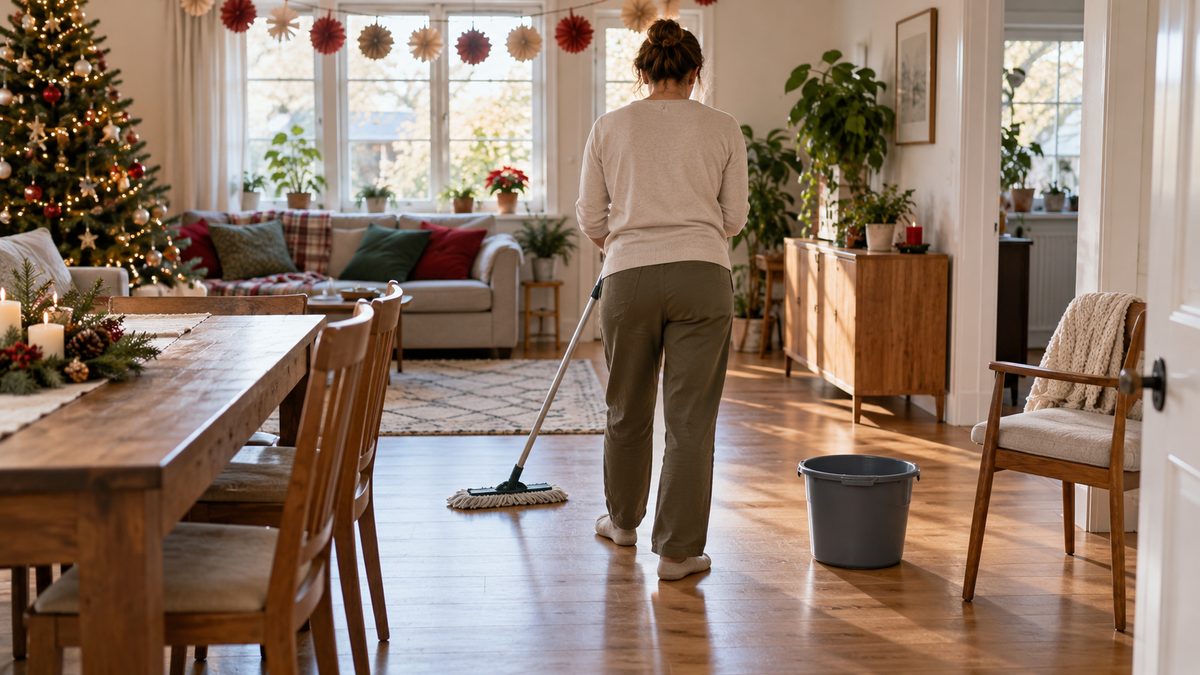
Back discomfort after festive cleaning can follow an unfamiliar amount of bending, reaching and lifting. Reduce the workload, alternate tasks and keep gently moving; pain alone cannot tell you what caused it. A room does not need to be finished in one session.
Before a festival, ordinary housework can become a much bigger job: scrubbing grout, emptying cupboards, shifting a sofa and reaching for decorations. The challenge is often the amount of work packed together. Changing the order can be as useful as changing how you bend.
Make a room plan before filling the bucket
Separate essential cleaning from jobs that can wait. Clear the routes between rooms first, including trailing cables and loose rugs. Put cloths, a light container of water and other supplies near the area you are cleaning so you are not repeatedly carrying everything across the house.
Start with a manageable patch rather than emptying every cupboard at once. Leave yourself a usable chair and a clear walking route. If fatigue arrives early, you can stop without having to lift boxes simply to reach a bed or doorway.
Allow for your usual activity level. A day of heavy cleaning is a substantial change if most of your week is spent sitting. Share tasks where possible, especially furniture moves, and spread the remaining work across the time available.
Match the adjustment to the cleaning task
| Task | Try this change | Reason to pause |
|---|---|---|
| Scrubbing a low surface | Work close to a small patch and change position | You keep reaching farther as your arms tire |
| Mopping a room | Move your feet with the mop and use a suitable handle length | You are twisting repeatedly from one planted stance |
| Emptying cupboards | Transfer light batches to a nearby raised surface | Objects obscure your view or pull you off balance |
| Moving furniture | Clear the route and arrange enough help | The item is stuck, unstable or beyond your control |
| Cleaning high shelves | Use appropriate stable access equipment | You must lean sideways or stand on tiptoe |
These adjustments aim to make the work more manageable; they cannot guarantee that you will avoid pain. The household chores posture advice covers related changes for routine cleaning between bigger sessions.
Bring scrubbing closer instead of stretching farther
For a sink or worktop, move close enough that your elbows do not stay stretched out. Let the cleaning method do some of the work: follow the cleaner's instructions rather than using extra force or mixing chemicals. Keep the area ventilated as directed.
At floor level, choose between supported kneeling, a comfortable squat or a long-handled tool according to your knees, balance and available space. No position has to be held throughout the job. Place padding under knees only where it stays dry and steady, and keep a clear way to stand up.
A small forward bend is part of everyday movement. The practical problem is staying folded over the same patch while tired. Move along with the task, bring supplies with you and stand or walk between sections rather than trying to scrub a wider circle from one spot.
Decide which furniture should stay where it is
Cleaning beneath a heavy wardrobe may not justify moving it. Do not rock tall furniture, drag something connected to cables or pipes, or assume that removing drawers makes an awkward item safe to handle alone. Ask for suitable help or leave the inaccessible area.
For a manageable object, check its weight and grip before committing. Keep it near your body, bend through your hips and knees as comfortable, and step round when turning. Avoid pulling hard against an item that has not moved. Read lifting heavy things before planning larger moves.
High shelves add a different risk. Never climb on a chair, wet stool or stacked boxes. Use equipment suited to the task, keep your body within its supports and climb down to reposition. The ladder and decorating guidance explains how access changes the job.
Use changes of task as your stopping cues
Finish one small area, then put the tool down and reassess. Alternate a demanding task with something lighter, such as sorting at a table. Drink when thirsty and take a proper sitting break when needed; switching from floor scrubbing to overhead wiping may still be demanding.
If discomfort builds, reduce the work rather than racing to finish. Gentle walking or comfortable everyday movement may be more tolerable than more lifting. Avoid forcing stretches into pain or treating soreness as proof that you need to stretch harder.
When soreness after housework needs attention
This article offers general information, not a diagnosis. Seek emergency care for new bladder or bowel changes, loss of feeling around the genitals or bottom, or new symptoms affecting both legs. Back pain after a serious fall or accident also needs urgent assessment.
Get prompt medical advice for fever with back pain, new weakness, or severe pain that starts suddenly or worsens quickly. Arrange an assessment if pain keeps disrupting sleep or daily activity, or is not improving. See when to see a doctor for back pain rather than assuming every symptom is caused by cleaning.
Frequently asked questions
Can I finish the cleaning tomorrow if I feel sore tonight?
Reassess how normal movements feel before restarting. Choose a lighter job or postpone the remaining work if bending, walking or lifting is uncomfortable. Pain that is worsening or limiting ordinary activity deserves medical advice rather than another demanding session.
Should I wear a back support for a cleaning day?
Do not rely on a support to make a heavy task manageable. Reducing loads and arranging help still matter. If a clinician has prescribed a support, follow their instructions about its use rather than adding one as a reason to work longer.
Is it sensible to clean before guests arrive on the same day?
Leave time between physical jobs and hosting if you can. Set a short essential list, make beds and seating usable early, and leave optional deep cleaning for another day. Hosting can involve more standing and carrying after the cleaning ends.
What if I only feel pain when I cough or sneeze afterwards?
Mention this to a healthcare professional, especially if it is new, persistent or accompanied by pain travelling into a leg. Do not use the timing after cleaning to decide the cause yourself. Seek urgent help if any emergency warning signs appear.