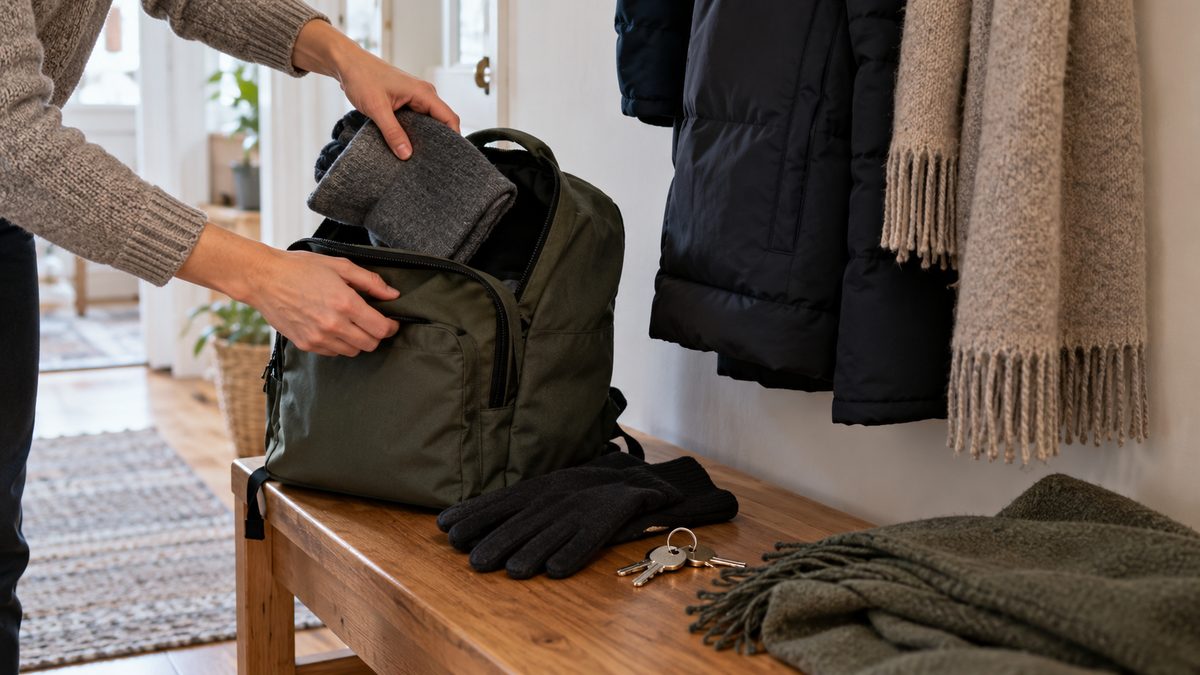
A heavy coat can add to the load you carry, and tight layers can make you move differently. Add a full bag and you may lean forwards, lift one shoulder or avoid turning your head. Keep enough warmth for the weather, but check freedom of movement and remove items you do not need.
There is no single coat weight or bag limit that suits every adult. Comfort depends on the load, distance, fit and your strength and health. A winter outfit should let you walk, look around and use your arms without a continual shrug or pull.
Test your whole outfit before leaving home
Try the coat over the layers you will wear outside, then add your scarf and usual bag. Reach forwards, bend your elbows and turn your head each way without forcing the movement. A coat that fits over a thin shirt may restrict you over a thick jumper.
Check that a scarf does not bunch behind your neck and press your head forwards. Arrange it for warmth without pulling it tight. A hood or high collar should not block the view you need for crossing roads, cycling or driving.
Walk across the room and notice the garment pulling between your shoulders or dragging at the neck. Try loosening an adjustable fastening or redistributing layers. Do not deliberately round your back or hold your shoulders up to make a restrictive outfit work.
Empty the pockets as well as the bag
Winter pockets tend to collect keys, gloves, receipts and devices. A heavy pocket can pull one side of a coat down, especially when another bag is already on that shoulder. Put everything on a table so you can see what travels with you.
Sort contents by the journey rather than by what might be useful someday. Keep essential medicines and necessary safety items. Remove duplicates and things left over from another day, and store work items at your destination if that is practical and secure.
| Load to check | Possible change | Check before leaving |
|---|---|---|
| Bulging coat pockets | Remove old receipts and spare objects | Essential keys remain easy to find |
| Several books or notebooks | Take only those needed for the day | You still have required work materials |
| Spare clothing | Leave a spare set at your destination where possible | You retain enough protection for the journey |
| Shopping added to a work bag | Plan a separate trip, delivery or help | The return journey remains manageable |
| Large containers | Choose a suitable smaller container when practical | You still carry enough food and water |
The aim is a load that stays manageable at the end of the day, including the walk home. The heavy bag and back comfort article gives further checks for daily carrying.
Fit the bag over the coat you will wear
A backpack with two straps may distribute a load more evenly than carrying it on one shoulder. Adjust both straps so the bag stays reasonably close without squeezing your arms or restricting breathing. Thick, slippery clothing can change the fit you used in warmer weather.
Place denser items close to your back and stop them sliding around. Avoid overfilling the bag until it pulls you backwards or makes you lean to compensate. Using both straps does not make an excessive load suitable.
For a shoulder or cross-body bag, adjust the strap so the bag does not swing widely or force you to hike up a shoulder. Change how you carry it when safe and comfortable, but reduce the contents first if every position feels heavy. Keep straps clear of moving machinery and vehicle doors.
Keep warmth without carrying a second wardrobe
Where you can choose, lighter layers may allow more movement than one bulky garment. Their suitability still depends on the weather and the time you will spend outside. Do not remove necessary protection just to reduce weight.
Think about the indoor part of the trip too. Carrying an unworn coat over one arm while balancing shopping can become awkward. Use available coat storage, or fold the coat into a bag only if that does not make the load too large.
In mild Indian winters, an early morning journey may need different layers from a warm afternoon. In colder UK or US conditions, wet and windy weather changes what protection you need. Choose for the local forecast and your actual route rather than copying a seasonal outfit.
Plan the pavement and the return load
Keep your view of the ground clear and choose footwear with grip suited to the surface. If a long coat catches your legs on steps, gather it safely before climbing. Our footwear and posture guide discusses comfort without relying on a particular shoe style.
Shorten the route, use transport or ask for help when the total load is too much. A wheeled bag may reduce carrying on a smooth route, but stairs and uneven paving can make it awkward. Do not replace a manageable carry with repeated heavy lifting up steps.
Put bags down before searching for keys rather than twisting while loaded. When collecting them again, face the load and bring it close before moving away. Follow the lifting guidance for heavier shopping, and split the task into manageable trips if needed.
Persistent pain needs a separate explanation
This is general guidance for everyday comfort. Pain that continues after reducing the load, recurring numbness, weakness or difficulty using an arm should be assessed. Fever, unexplained weight loss or back pain after a substantial fall also warrants medical advice.
New bladder or bowel control changes, numbness around the genitals or bottom, or new symptoms affecting both legs need emergency care. Do not assume clothing is the cause. Read when to seek medical help for back pain for more detail.
Frequently asked questions
Should I weigh my bag every morning?
You can use weight to compare what you removed, but there is no universal safe number for every adult. How the load affects walking, balance and comfort matters. Seek tailored advice if a necessary load repeatedly causes symptoms.
Is carrying equal bags in both hands enough?
It may feel more balanced, but the total load still matters and both hands become occupied. Consider doors, stairs and handrails. Reduce the amount or arrange help if you cannot walk and use necessary support safely.
Can a tight scarf cause a neck problem?
A scarf that presses or restricts movement can be uncomfortable, so loosen or rearrange it. Persistent neck pain needs its own assessment. Do not assume that changing a scarf explains symptoms such as arm weakness or continuing numbness.
How should I put on a loaded backpack?
Set it on a stable surface at a reachable height, keep it close and put on the straps without a sudden swing. If you struggle to get it on or off, remove contents or ask for help rather than jerking it over a shoulder.