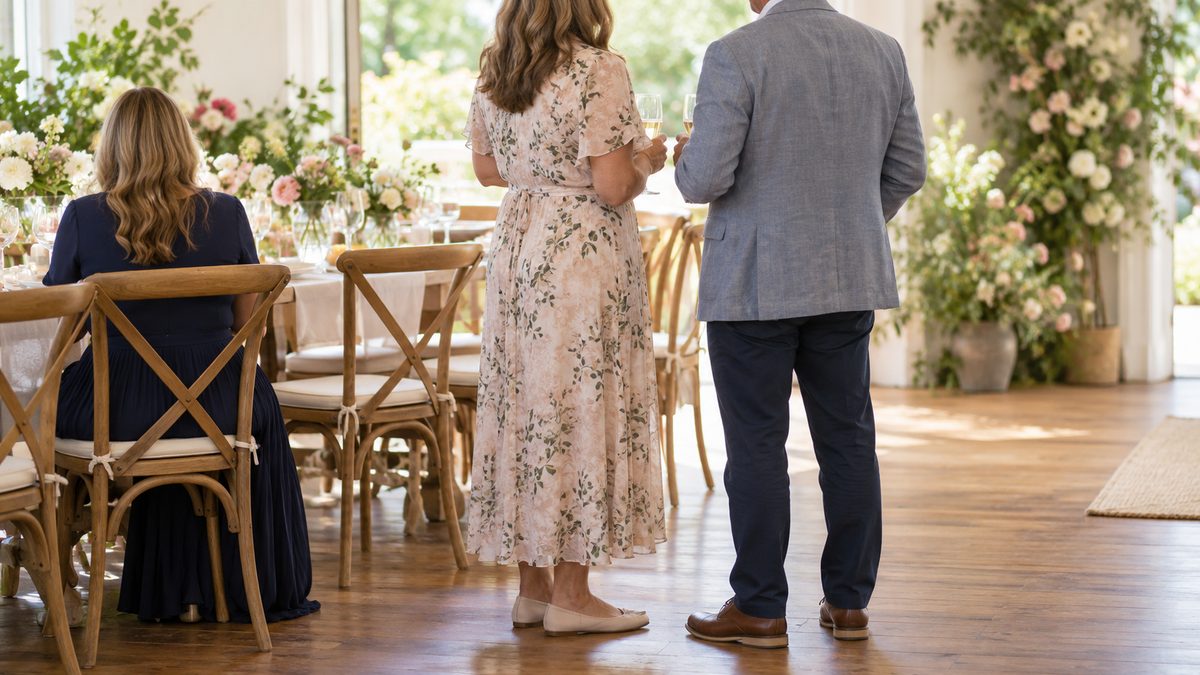
For a long party or wedding, choose familiar shoes, vary your stance and sit before discomfort builds. You do not need to hold a rigid upright pose for the whole event. Planning access to a seat can matter more than finding a supposedly perfect standing position.
Wedding ceremonies, receptions and family celebrations often combine waiting, chatting, photographs and dancing. Each may feel manageable alone, yet together they can mean much longer on your feet than usual. Think through the whole occasion, including travel and the journey home.
Choose shoes for the venue as well as the outfit
Wear shoes that fit securely and have already been comfortable during ordinary walking. Check for rubbing, slipping at the heel and pressure across the toes. A shoe that feels fine while sitting may behave differently on grass, steps or a polished floor.
If you prefer heels, consider how stable you feel and how long you expect to wear them. Bringing a comfortable alternative gives you a choice later. No heel height can guarantee back comfort, and changing into unfamiliar flat shoes is not automatically helpful if they rub or slip.
Try the full combination before the event: shoes, clothing and the bag you will carry. A long hem that catches underfoot or a heavy shoulder bag can make moving and sitting awkward. Our footwear and posture advice discusses fit and comfort without treating one shoe style as a cure.
Let your stance change during conversations
Stand with your knees relaxed and your feet arranged so you feel steady. Shift weight gently, take a step or turn towards a different speaker. You do not need to pull your shoulders back hard, squeeze your stomach continuously or keep your weight perfectly equal.
If leaning lightly on a secure surface feels comfortable, that is an option. Avoid relying on a decorative table, folding screen or someone else's chair back. Keep pathways clear and do not stand where a small weight shift could take you off a step.
Try changing your place in the group rather than twisting your neck and trunk to speak over one shoulder. Bring your drink closer rather than holding your arm out for a long conversation. The standing posture guide offers more ways to reduce the effort of staying still.
Plan a seat around the event timetable
| Part of the occasion | Comfort plan | Useful preparation |
|---|---|---|
| Arrival and greetings | Pause seated after travelling | Find available seating before joining a crowd |
| Ceremony or speeches | Use a chair when offered | Ask about access if standing is difficult |
| Photographs | Sit between groups | Tell the organiser you may need a break |
| Reception conversation | Alternate standing with seated chats | Choose a spot near accessible seating |
| Dancing and departure | Rest before fatigue affects balance | Keep comfortable shoes and your return plan available |
You do not need a universal break interval. Use transitions, such as the end of a speech or a change of music, as reminders to check how you feel. If discomfort has started, take the break then rather than waiting for the next convenient moment.
Make sitting breaks useful without becoming isolated
Invite someone to sit with you or choose a chair near the conversation. A clear request such as needing a seated catch-up is often easier than trying to endure discomfort unnoticed. If seating is limited, tell the host in advance so a suitable place can be considered.
Choose a stable chair you can get into and out of comfortably. Very low soft seating may make standing again more effortful. Let your feet rest securely and change your position as needed. A short easy walk after sitting can provide another change before returning to a standing group.
If you are hosting, place some chairs where people naturally gather rather than only around the dining table. Keep the route to the toilets and exit clear. Guests should not have to carry a chair through a crowded room to take a break.
Treat dancing and queues as part of the same load
Start dancing with movements that feel comfortable and build gradually if you want to continue. There is no need to copy deep bends, jumps or fast turns. Leave the floor when tired rather than waiting until your movement becomes awkward or you feel unsteady.
Food queues and coat collection can add more standing after the main event. If you are with someone, ask them to hold your place where the venue permits it while you sit nearby. Avoid carrying several plates or glasses when fatigue affects your grip or view.
A little easy walking during the evening can vary the activity, but it should not become another endurance target. See walking and back health for adapting movement to your current comfort. Leave enough energy for stairs and transport at the end.
Distinguish an ordinary need to rest from warning signs
This is general comfort advice. New severe pain, fever with back pain or rapidly increasing symptoms need prompt medical attention. Seek emergency care for bladder or bowel changes, numbness around the genitals or bottom, or pain, numbness or weakness affecting both legs.
Do not push through dizziness, chest pain or unusual breathlessness to stay at an event. Get immediate help for serious symptoms. For back symptoms that recur each time you stand or limit everyday activity, arrange an assessment and read when to see a doctor about back pain.
Frequently asked questions
Should I avoid an event if I already have back pain?
That depends on your symptoms and any medical advice you have received. Consider attending for less time, arranging seating and keeping an easy way home. If symptoms are new, severe or changing, seek advice before relying on these comfort adjustments.
Can I take my shoes off during the reception?
Only where the floor and venue rules make it suitable. Broken glass, spills, cold surfaces and other guests stepping on your feet can make barefoot walking unsuitable. A clean, secure pair of comfortable shoes may be a more practical change.
Does standing straight help me look better in photographs?
You can choose a comfortable pose for the photograph without holding it between pictures. Ask for a moment to reset if a pose feels strained. Appearance does not provide a reliable measure of back health, and a photographer's direction should not require pain.
What if family members expect everyone to stand for a ceremony?
Ask the host privately about a seated place before the day. Explain the practical need without feeling obliged to give personal medical details. A chair with a clear view and accessible exit may let you participate comfortably while respecting the occasion.