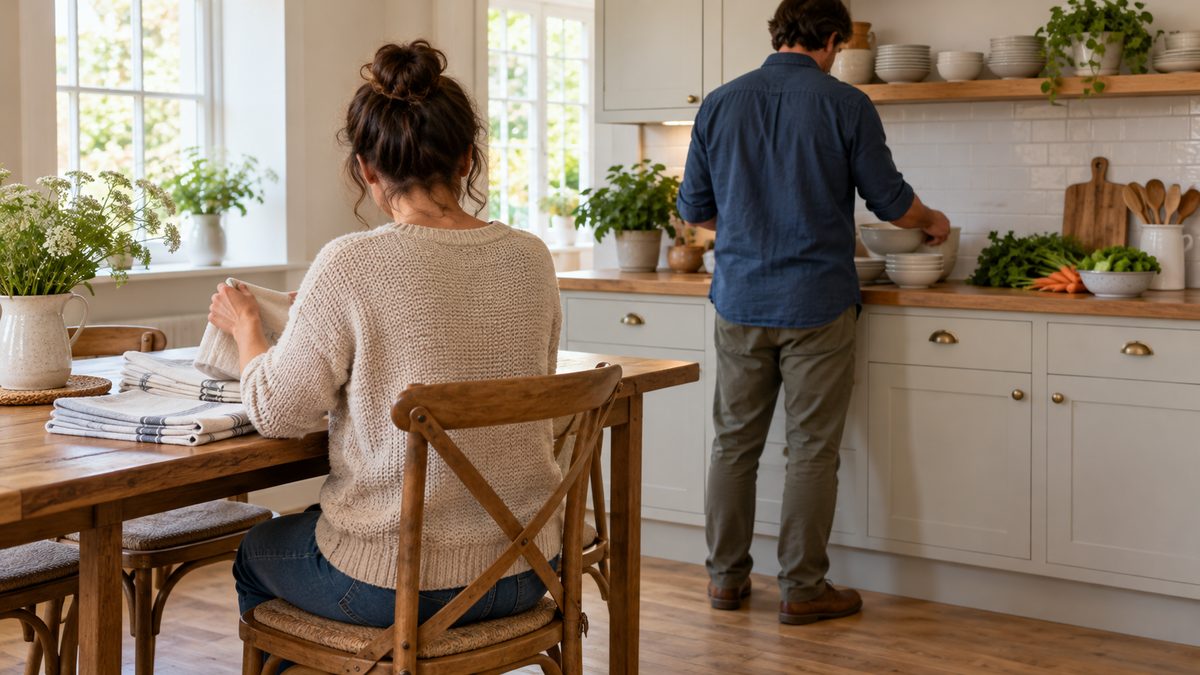
Make hosting easier on your back by spreading the work, sharing awkward tasks and preparing clear working surfaces before guests arrive. Alternate cooking, cleaning and seated jobs instead of finishing every demanding task in one uninterrupted session.
The main goal is a manageable visit. A simpler menu or fewer last-minute changes can reduce the work more effectively than concentrating on how straight you stand. This advice concerns everyday task planning, not treatment for a back problem.
Separate what guests need from what can wait
Write a short list covering food, a safe place to sleep, bathroom essentials and clear walking routes. Put decorative jobs and deep cleaning below those basics. Decide what can be left undone if you become tired, so the decision does not have to be made while you are already sore.
Spread preparation across available days and avoid putting every physical job on arrival day. If family members ask how to help, give them a whole task, such as changing a bed or clearing a table, rather than keeping yourself involved in every stage.
Arrange the kitchen around repeated reaches
Put frequently used ingredients and utensils within an easy reach before cooking. Move a chopping task to a surface where you can work without bending over it. Keep the floor dry and leave enough space to turn with your feet while carrying dishes.
Use a stable chair for suitable preparation jobs if you can sit close enough to the surface. Avoid sitting low while reaching up to a high counter. Our large-meal cooking advice explores how to divide preparation, cooking and clearing up.
Fill a heavy pan where you will use it when that can be done safely, or move water in smaller amounts. Do not carry a large hot pot merely to save a trip. Arrange help before lifting something that needs two people, and agree where it will be placed.
Give cleaning a route and a stopping point
Work through a room in a planned direction rather than repeatedly crossing it for supplies. Use handles that let you work close to the task without an extended reach. Move your feet with the mop or vacuum rather than staying planted and twisting from side to side.
For low surfaces, choose a position your knees and hips tolerate, or use a suitable long-handled tool. Do not climb onto a chair to reach a high shelf. If the task needs access equipment or assistance you do not have, leave it for another time.
A finished room is a useful point to pause, but you can stop sooner. Alternate a floor-cleaning task with sitting to fold towels or write a shopping list. See posture during household chores for further ways to change the task rather than endure it.
Move guest bedding with a partner and a clear path
Mattresses and folded beds can be awkward even when they do not feel especially heavy. Check doors, stairs and the final space before moving anything. Remove trip hazards, keep children away from the route and arrange another capable adult for an item you cannot control alone.
Do not drag a large mattress backwards while unable to see the floor. Decide how to stop and set it down before lifting. If it bends, catches on a doorway or blocks the route, pause and reassess rather than twisting harder to free it.
For temporary sleeping spaces, the guest bed and air mattress guide can help you consider access and comfort. A bed that fills the room may leave too little space for the guest to stand safely.
A hosting checklist organised by workload
- Before arrival: clear paths, place essentials within reach and share the bedding work.
- Before cooking: gather ingredients and check the route for hot dishes.
- During the meal: accept help with serving and leave non-urgent washing up.
- Between tasks: sit, walk gently or change the kind of work you are doing.
- Before bedtime: remove bags and trailing bedding from walking routes.
- After departure: spread laundry and cleaning across manageable sessions.
Keep the checklist short enough to use. A detailed schedule that leaves no room for fatigue can become another demand. Give yourself an easy version of the visit, such as food that needs less preparation and towels guests can find themselves.
Tell guests what would make the visit easier
Explain practical needs plainly: someone else can carry cases upstairs, children can help collect toys, and visitors can put used dishes together. You do not need to justify a rest by showing how much pain you are in. Sharing work is part of organising the household.
If symptoms begin during a task, stop and make the load or reach easier before continuing. Follow the general lifting advice for manageable items, but remember that technique cannot make an oversized load suitable for one person.
Recognise symptoms beyond ordinary tiredness
Seek prompt medical advice for worsening back pain, fever, unexplained weight loss or pain that repeatedly wakes you. Read when back pain needs medical attention rather than attributing every symptom to hosting.
New loss of bladder or bowel control, numbness around the bottom or genitals, or new weakness or numbness in both legs needs emergency assessment. Severe pain following a serious fall also requires urgent help. Leave the chores and arrange care when these signs occur.